
Design it. Build it. Test it. Improve it.
Our engineering team works close to the hardware, the shop floor, and the microscope. This is full-loop engineering for people who want to see what their work becomes.
At Hummingbird Scientific, engineers, machinists, technicians, software/controls engineers, and applications scientists build advanced microscopy instruments together, from first concept through machining, microfabrication, assembly, calibration, TEM/cryo-EM validation, and the next revision.
Design

Machine
Assemble
Calibrate
Test
Improve
Six steps. One team. No handoffs.
The work stays connected from concept to experiment.
At many companies, engineering is divided into narrow lanes. One group designs, another group builds, another group tests, and the people involved may never see the final result.
Hummingbird works differently.
Design, machining, microfabrication, assembly, calibration, microscopy testing, and field feedback all happen close together. The engineer can talk to the machinist. The machinist can challenge the drawing. The technician can flag an assembly issue before it becomes a customer issue. The applications scientist can test the instrument in a real microscope. The next design can be better because the whole team saw what happened.
That full loop is the point.
Design
Turn scientific requirements into instrument concepts, from first-principles analysis through 3D CAD and FEA.
Machine and Build
Build precision parts where tolerance and surface finish directly affect what researchers can measure.
Assemble
Bring mechanical, electrical, fluidic, and thermal systems together into one instrument.
Calibrate
Verify sensors, motion, temperature response, and electrical stability against real application requirements.

Test
Validate instruments under real microscopy conditions in our in-house TEM and cryo-EM labs.

Improve
Learn from the lab, the shop floor, and researchers in the field, then make the next version better.
What we build here
Advanced instruments, built as complete systems.
The work here is not one narrow slice of a product. Our instruments combine precision mechanics, microfabricated chips, sensors, electronics, software, fluidics, thermal control, motion control, microscope integration, and real application testing.
A project may start as a sketch, a customer problem, a new research requirement, an OEM integration, or an internal advanced-system idea. It becomes real because the people designing it, machining it, wiring it, assembling it, testing it, and improving it are close enough to solve the instrument together.
Next-generation TEM stages
We build motion systems where stability, positioning, drift, backlash, runout, vibration, sample access, and microscope compatibility must all considered at once.
These projects bring together mechanical design, precision machining, sensor feedback, controls, software interfaces, and TEM validation. They are not just mechanisms. They are microscope-integrated systems where motion quality can determine whether an experiment succeeds.
Cryo-EM sample preparation systems
Our engineers work on tools that connect mechanical engineering, thermal control, sample handling, fluid behavior, timing, automation, and microscopy outcomes.
Cryo-EM sample preparation is an engineering problem with biological consequences. The instrument has to move quickly, repeatably, and gently, while preserving the conditions researchers need. That requires builders who can think across mechanisms, controls, materials, temperature, user workflow, and validation.
In-situ TEM holders
We build instruments that allow researchers to heat, cool, bias, flow liquid, expose samples to gas, apply optical stimulation, manipulate samples, or perform experiments inside the microscope.
These systems must survive vacuum, electron-beam exposure, temperature extremes, electrical isolation requirements, mechanical constraints, and user handling - while still being stable enough for nanoscale imaging and analysis.
Microfabricated chips and sample interfaces
The chip is part of the instrument.
In in-situ microscopy, the holder body is only one part of the system. The chip, electrodes, windows, sample environment, wiring, seals, thermal pathways, fluidic paths, and microscope interface all have to work together. That is why microfabrication is part of our engineering stack, not a separate afterthought.
When a research problem needs a custom electrode geometry, substrate, window, material stack, or lab-on-a-chip configuration, we can design the sample interface along with the instrument around it.
Custom OEM and research systems
Some projects do not fit a standard product category.
We build custom instruments and subsystems for researchers, companies, OEMs, and laboratories that need specialized microscopy hardware. These projects often require mechanical design, machining, electronics, software, calibration, and application testing to move together from the beginning.
Software, controls, sensors, and automation-ready instrumentation
Modern scientific instruments are not purely mechanical.
Sensors, control electronics, software interfaces, safety behavior, metadata, calibration records, and automation readiness are part of the instrument architecture from the start. Our software and controls work is tied directly to hardware performance: motion, temperature, biasing, flow, timing, safety, repeatability, and data capture.
The goal is not software for its own sake. The goal is an instrument that is easier to control, easier to validate, easier to support, and easier to trust.
Engineering across the full instrument stack
Mechanics, chips, electronics, software, and microscopy have to work together. Hummingbird's engineering environment is built around the full stack of advanced microscopy instrumentation.
Our work often involves:
- Precision mechanical design
- Micro-scale and meso-scale machining
- Microfabricated chips, electrodes, windows, and sample interfaces
- Vacuum-compatible assemblies
- Heating, cooling, cryogenic behavior, and thermal pathways
- Electrical biasing, sensing, cabling, connectors, and circuit integration
- Fluidic and gas-flow environments
- Motion systems, positioning, and stability
- Control software, firmware, user interfaces, safety behavior, and data records
- TEM and cryo-EM validation
- Custom systems for researchers, laboratories, and OEM platforms
The important thing is not that these capabilities exist in separate rooms. The important thing is that they are connected.
A holder, stage, chip, controller, and software interface may look like separate pieces from the outside. Inside the engineering process, they are one system.
Built here. Used in real research.
Local engineering with global scientific reach.
The work happens close to the bench, the shop, and the microscope, but the instruments do not stay here.
Hummingbird systems support researchers, laboratories, companies, and microscope platforms around the world. A part machined here may end up in a university TEM lab. A chip designed here may support an in-situ experiment overseas. A control system built here may help a researcher run a more repeatable experiment. A custom instrument may become part of a larger OEM or institutional platform.
That global reach matters because it gives the work consequence. The details handled inside our building can affect experiments happening far beyond it.
What a career here can look like
You see more of the instrument, so you learn faster.
The right people grow fast here because the work is real. Engineering is close to the instrument, the shop floor, the assembly bench, the calibration lab, the microscope, and the customer.
A mechanical engineer may see a concept through machining, assembly, calibration, testing, and revision. A machinist may help solve design problems through manufacturability. A technician may catch the details that determine whether an instrument is reliable in the field. Electronics, software, controls, and applications teams work close to the hardware and the experiment, not at a distance from it.
This work is hands-on, detailed, sometimes ambiguous, and often difficult. People do well here when they want to understand why something failed, respect other disciplines, and care enough to follow the work through when the first version does not work.
The work is demanding, but it is not abstract. You can point to something and say: I helped build that.
Come build the full loop.
If you want hands-on engineering work close to real instruments, real materials, real microscopes, and real scientific problems, Hummingbird Scientific is looking for mechanical engineers, machinists, technicians, electronics and software/control engineers, and applications scientists who want to help build the next generation of microscopy instruments.
Related capabilities and facilities
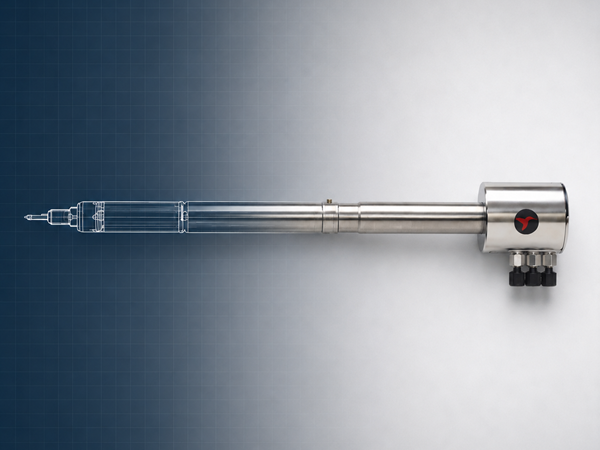
Custom solutions
At Hummingbird Scientific, we believe that researchers shouldn't have to settle for second-rate. So, don't see what you're looking for among our standard options? Our custom department is ready to help.
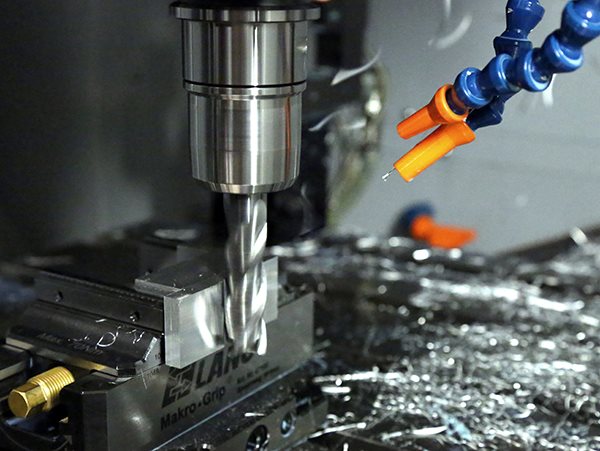
Manufacturing and assembly
Our precision machine shop is the foundation of our in-house manufacturing, producing high-tolerance components for in situ microscopy. Paired with dedicated assembly and inspection, it ensures every part meets exacting performance and quality standards.
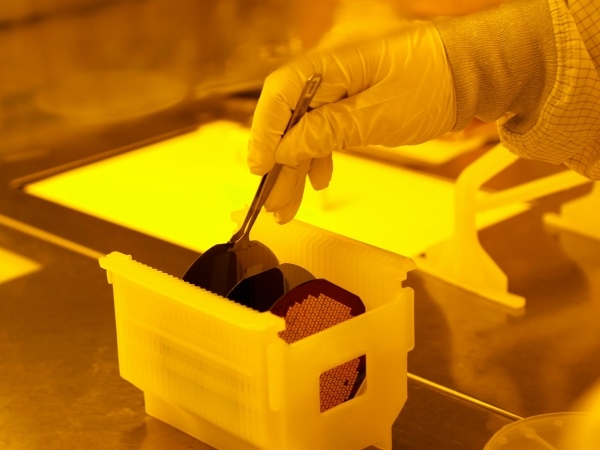
In-house microfabrication
Our work is supported by a dedicated microfabrication division that develops MEMS chips and custom devices for in situ microscopy systems, including gas, liquid, heating, and electrical biasing applications.

Calibration and inspection lab
In our in-house Calibration Lab, we measure thermal, electrical, and magnetic performance to ensure stable, accurate readouts that you can rely on from the start of every experiment.
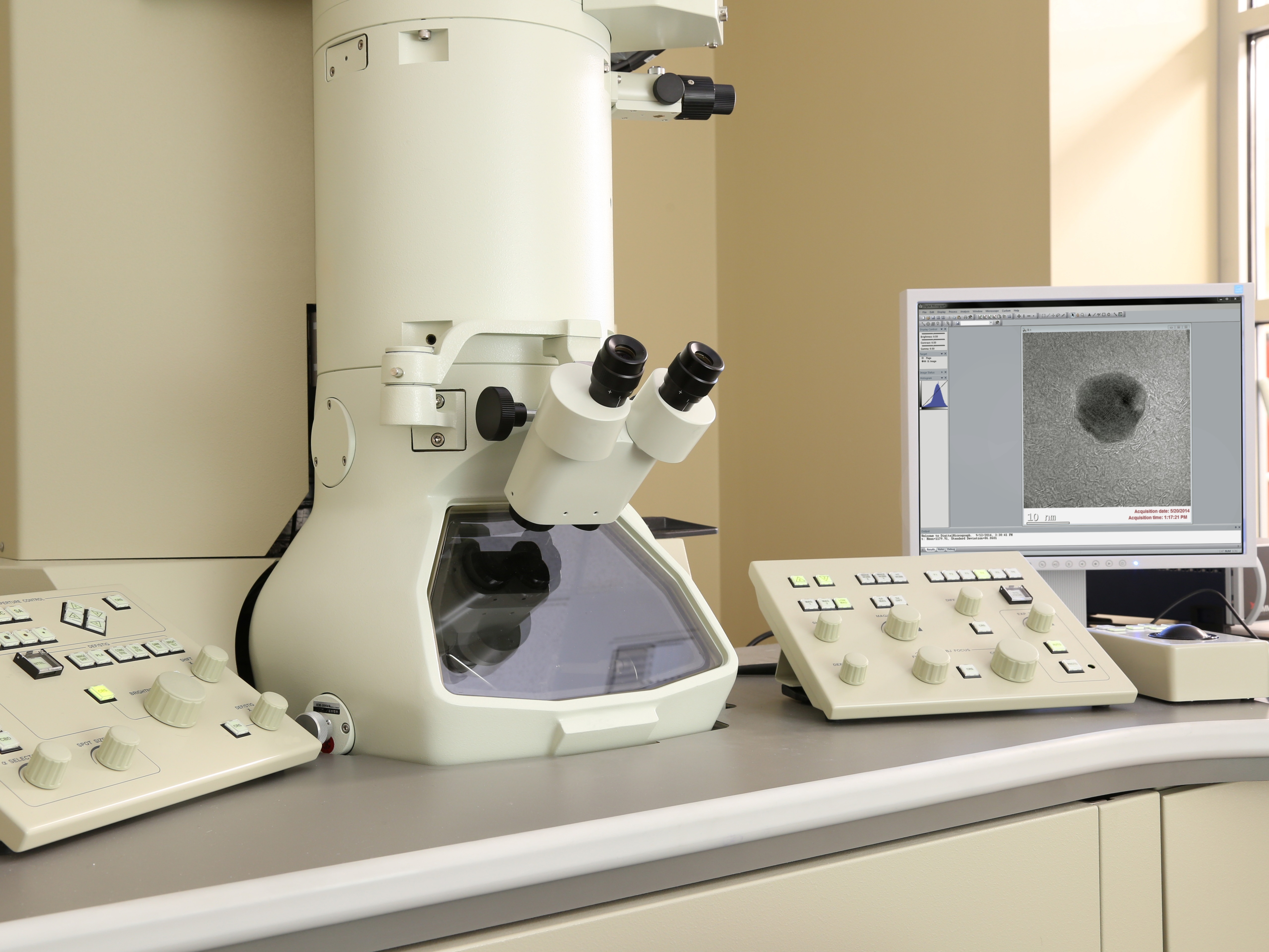
TEM and cryo-EM labs on site
Hummingbird maintains internal TEM and cryo-EM laboratories where products, prototypes, and workflows are developed and validated under real microscope conditions, connecting engineering decisions with practical performance and application needs.