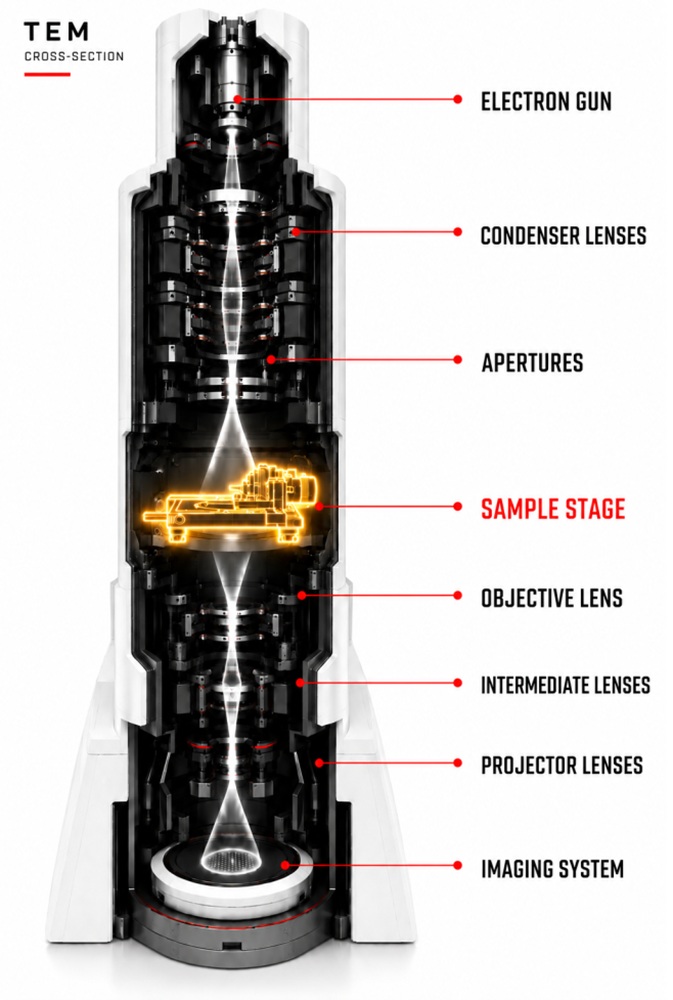
Atomic resolution is only part of the system
Modern electron microscopes can resolve structures at the atomic scale, but automated measurement also requires predictable specimen motion. Drift, backlash, hysteresis, thermal instability, and limited positional repeatability can increase the need for correction, image registration, and reacquisition.
As microscopy moves toward unattended acquisition, structured measurement, and high-volume datasets, the stage must do more than move the specimen. It must support reliable movement between defined locations and return to regions of interest with less dependence on continual operator correction.
Move. Return. Measure. Repeat.
Designed for advanced workflows
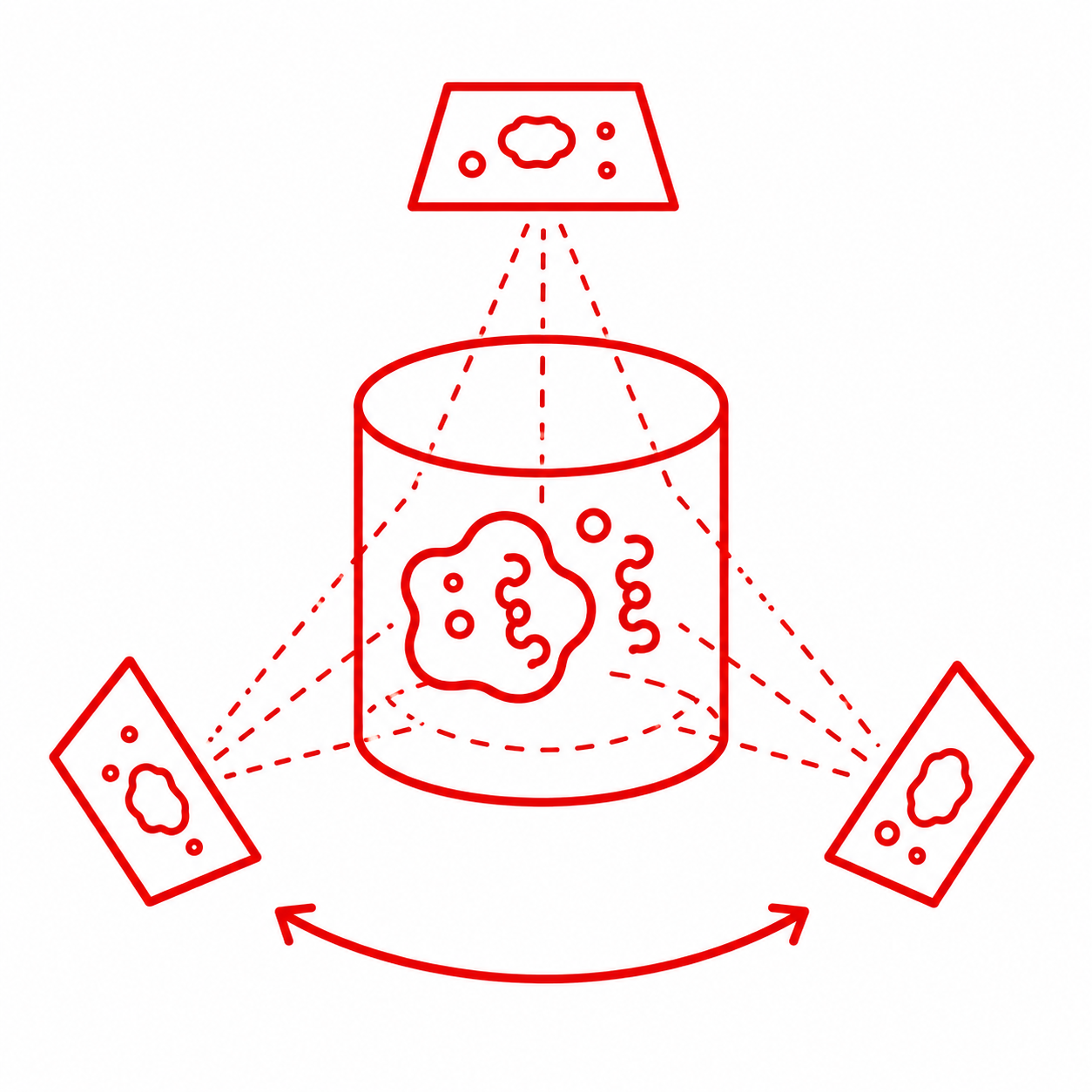
Tomography & 4D STEM
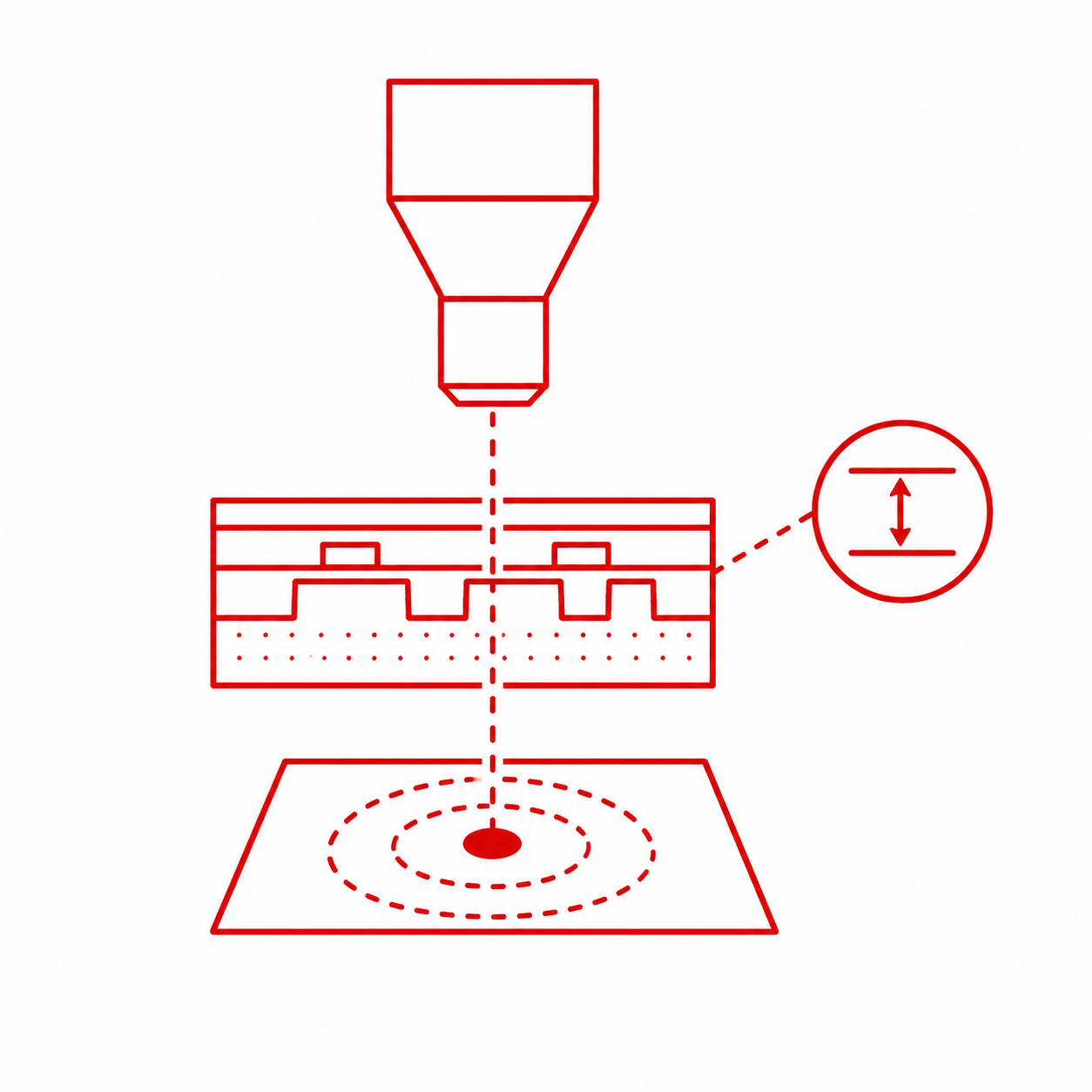
Semiconductor metrology
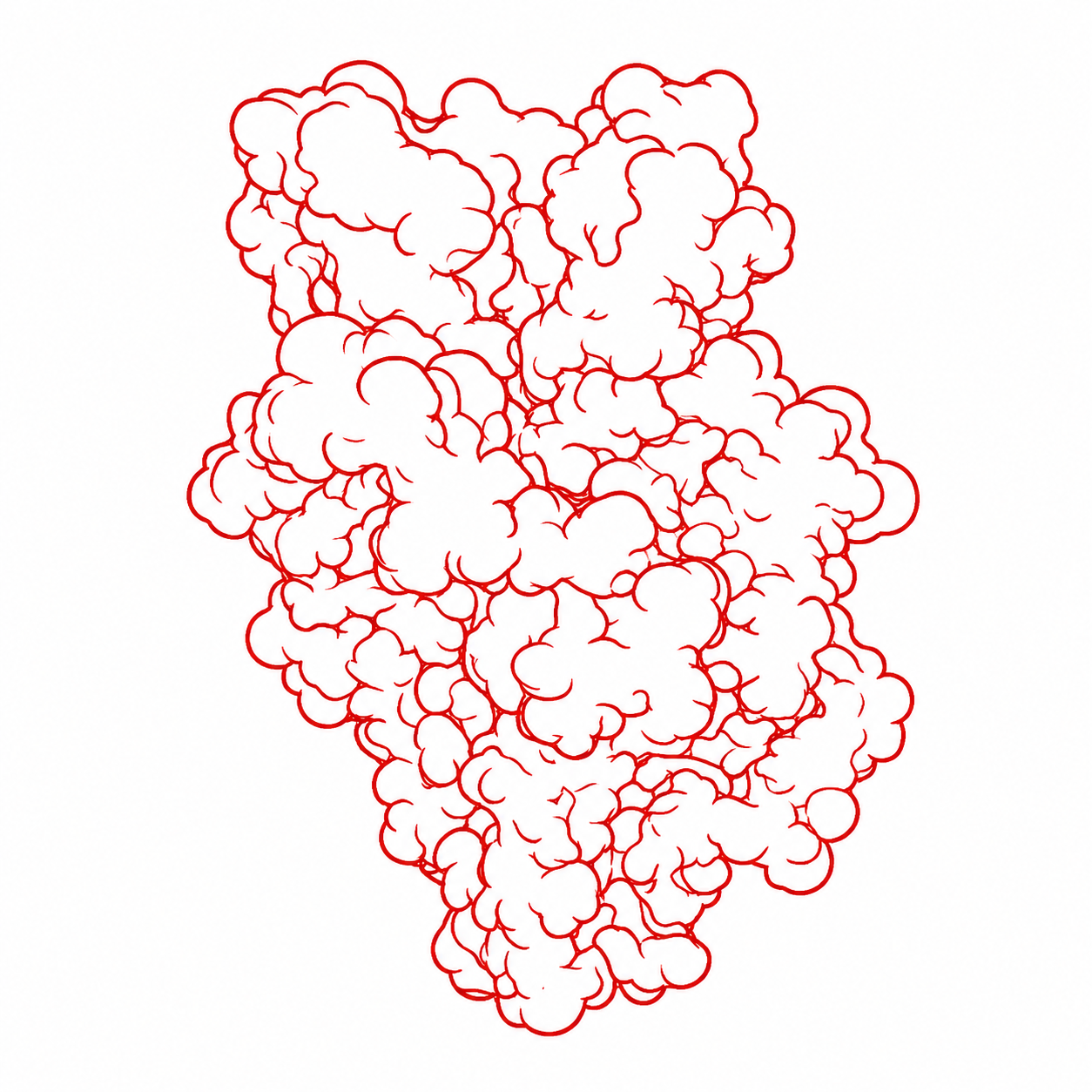
High-throughput cryo-EM
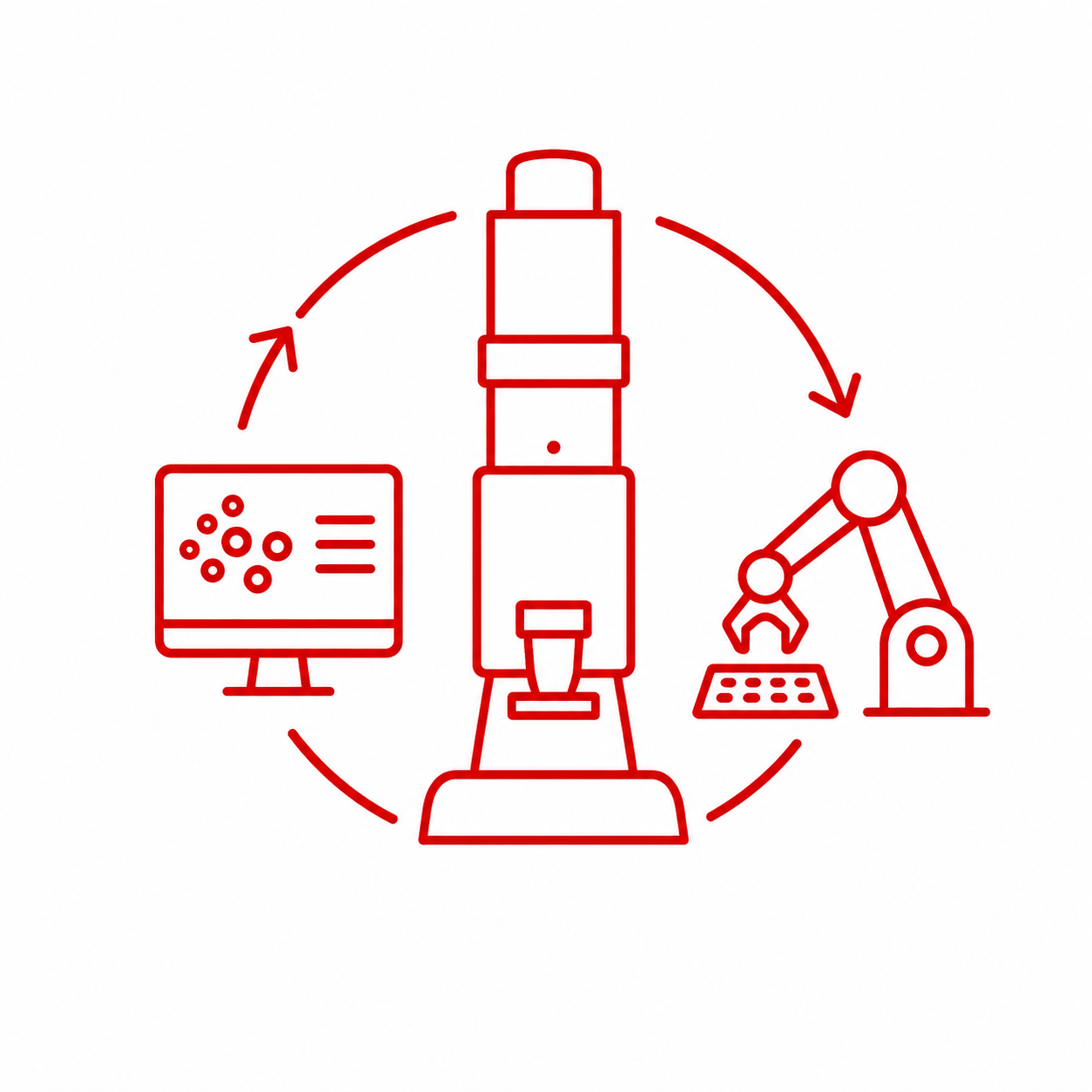
Autonomous acquisition

AI driven Microscopy
The motion foundation for automated TEM
The Precision TEM Stage is being developed to connect repeatable specimen motion with automated acquisition and future microscope platforms.
A new architecture for precision TEM motion
The Precision TEM Stage is being developed around:
- Repeatable nanoscale positioning
- Closed-loop motion control
- Thermal and mechanical stability
- A stable, interpretable coordinate system
- Integration with acquisition and automation environments
The objective is to provide the motion foundation required for more repeatable acquisition, nanoscale metrology, and advanced microscopy automation.
What reliable specimen coordinates enable
A stable coordinate system can help acquisition software:
- Move between defined locations
- Return to previously measured regions
- Preserve spatial context across extended workflows
Designed for future microscope platforms
The Precision TEM Stage is being developed for integration into future microscope platforms, specialized metrology systems, and advanced automated instrumentation. Potential pathways include OEM integration, joint platform development, semiconductor-specific systems, private-label deployment, licensing, and integration with acquisition and automation environments.