
How do batteries transform at the nanoscale under real-world operating conditions?
Hummingbird Scientific in-situ sample holders enable real-time characterization of sensitive battery materials in relevant electrochemical environments, linking nanoscale transformations and reaction mechanisms to performance. Conduct multimodal TEM, SEM, and X-ray experiments across a broad range of electrolytes at temperatures above 300 °C without drift correction, using ultra-stable, cross-compatible microfabricated chips.
Each holder is designed for performance, reproducibility, and ease of use. Explore battery-material experiments below, along with published examples and compatible Hummingbird products.

Which type of experiment best matches your research?
Liquid-Electrochemical battery processes
Correlate electrochemical performance with nanoscale structural and chemical evolution during battery cycling.

Liquid-Electrochemical battery processes
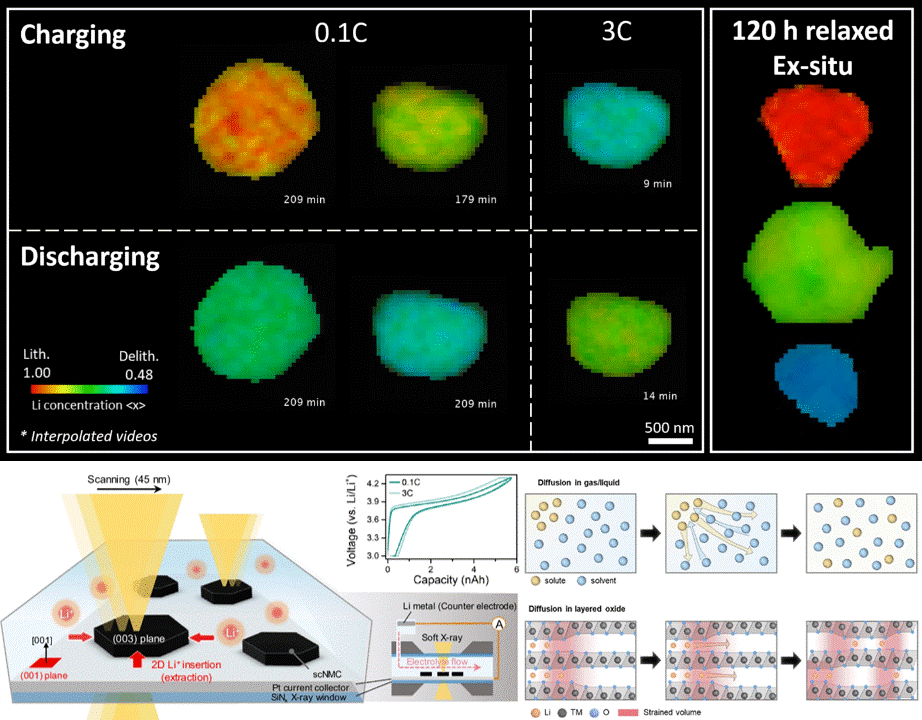
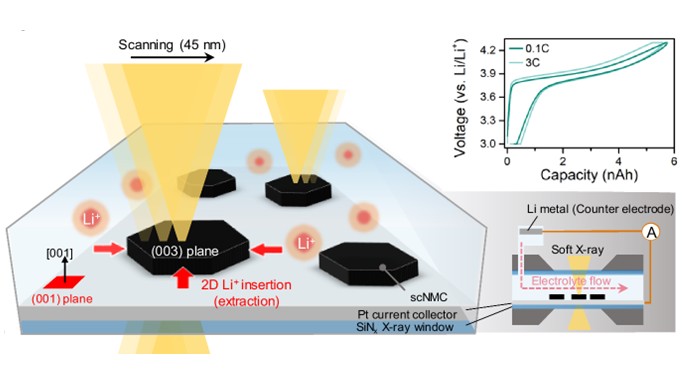
Strain-associated lithium transport in single crystalline NMC battery particles
Single crystalline LiNi1/3Mn1/3Co1/3O2 (scNMC) particles were characterized using operando scanning transmission X-ray microscopy (STXM) combined with post-cycling Bragg coherent diffraction X-ray imaging to uncover strain-associated lithium transport dynamics.
- Lithium transport occurred counter to concentration gradients.
- Near-uniform yet fluctuating lithium dense and poor regions were observed during cycling.
- Management of lithium-poor surface regions may improve rate performances.
Reference: Danwon Lee, et al, Nature Communications 16, 9018 (2025) DOI: 10.1038/s41467-025-64068-9
Image copyright © 2025 Springer Nature Limited
Inert transfer of air-sensitive materials
Preserve pristine battery materials during transfer and characterize their operando electrochemical behavior.
Inert transfer of air-sensitive materials
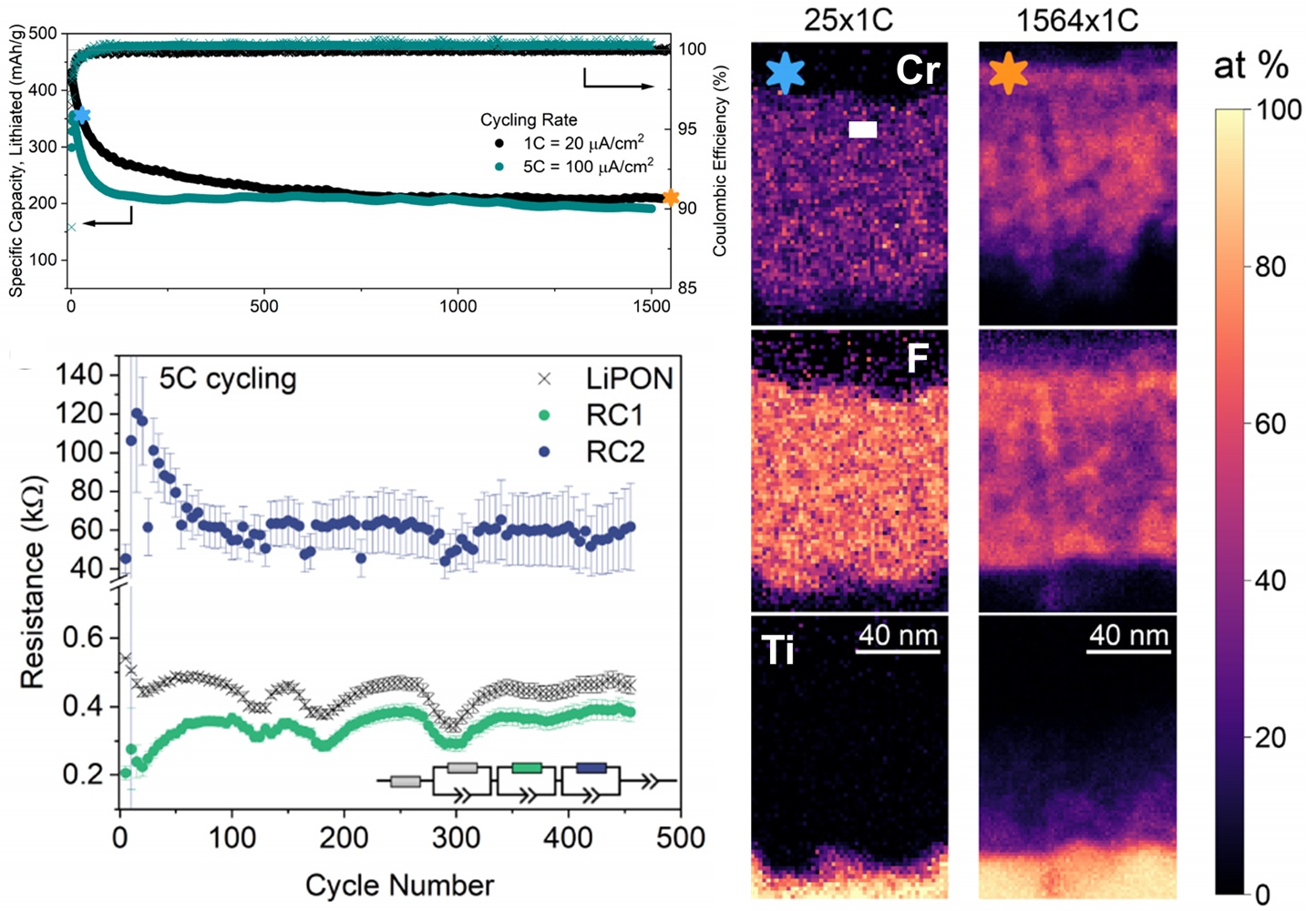
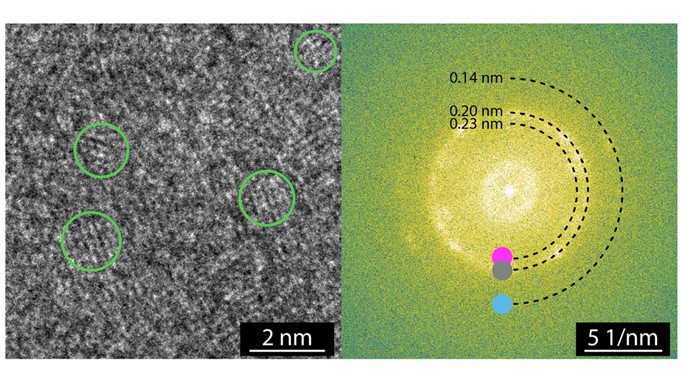
Cr-LiF as a High Energy Density Conversion-Type Cathode for Li-ion Solid-State Batteries
Lithiated Cr-LiF thin film transition-metal fluoride cathodes were deposited with a controllable stoichiometric ratio and characterized in-situ during cycling electrical cycling.
- Cr-LiF with a 1:1.2 ratio produced a heterogeneous thin film that outperformed Fe-LiF analogs.
- Operando measurements and first-principles calculations indicate CrF2 is the dominant delithiated phase.
- Capacity falls from 435 mAh/g to only 208 mAh/g over 1500 cycles.
Reference: Joel Casella, et al, Communications Materials 7 113 (2026) DOI: 10.1038/s43246-026-01121-0
Image copyright © 2026 Springer Nature Limited
Site-specific contact biasing of battery materials
Perform localized charge-discharge cycling while imaging structural and chemical transformations in battery materials.
Site-specific contact biasing of battery materials
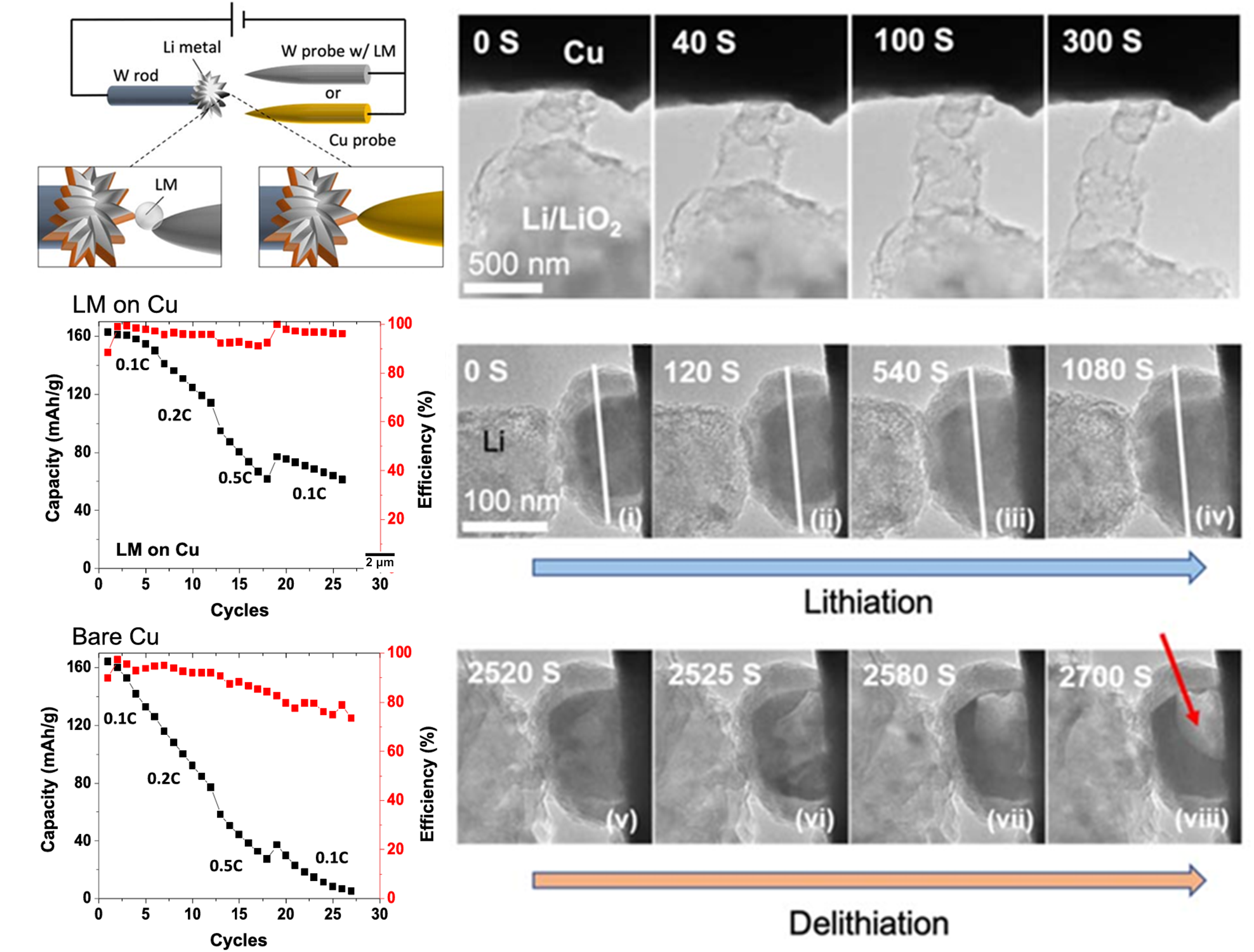
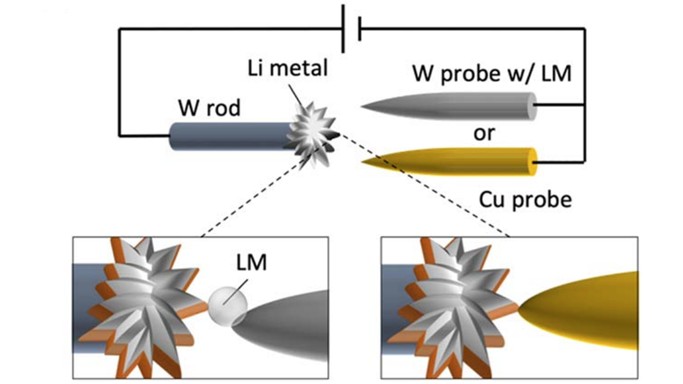
Liquid metal coating improves cycle performance of lithium metal oxide cathode
The effect of a gallium-based liquid metal (LM) coating on lithium metal LiNi1/3Co1/3Mn1/3O2 (NCM) cathode cycle performance was investigated by characterizing microstructural evolution over many lithation and delithiation cycles.
- Localized contact biasing of the Li metal oxide cathode was performed with LM nanoparticles on the probe.
- The LM coating reduced galvanostatic charge-discharge overpotentials, improving cycle performance.
- The LM layer facilitated the decomposition of dendritic lithium, slowing degradation.
Reference: Supriya Koul, et al, J. Electrochem. Soc. 169 (2) 020542 (2022) DOI: 10.1149/1945-7111/ac4ea5
Image copyright © 2022 The Author(s). Published on behalf of The Electrochemical Society by IOP
Chemical mapping of solid-electrolyte interphase (SEI)
Characterize the chemical composition and evolution of the solid-electrolyte interphase during operando battery cycling.
Chemical mapping of solid-electrolyte interphase (SEI)
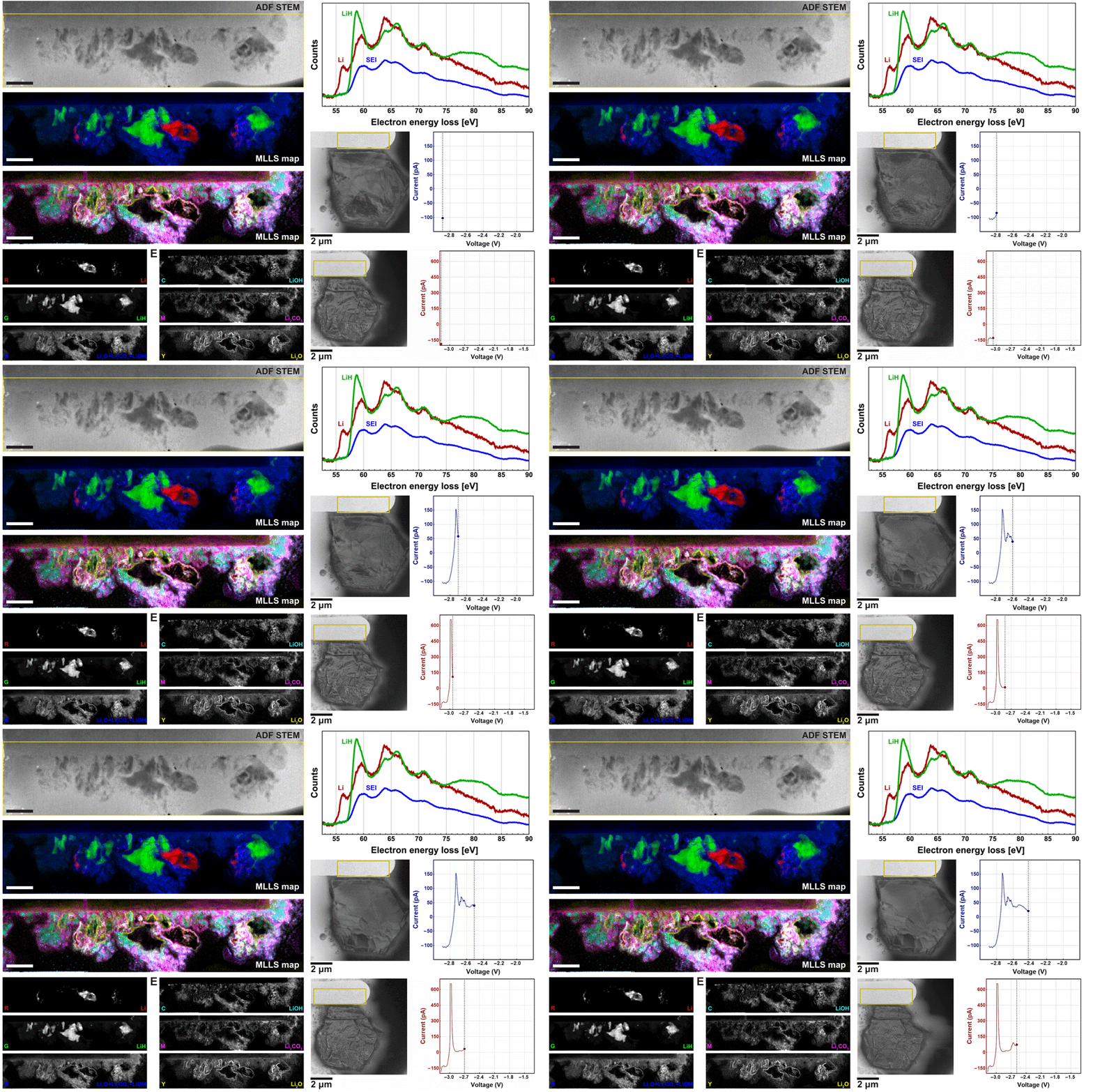
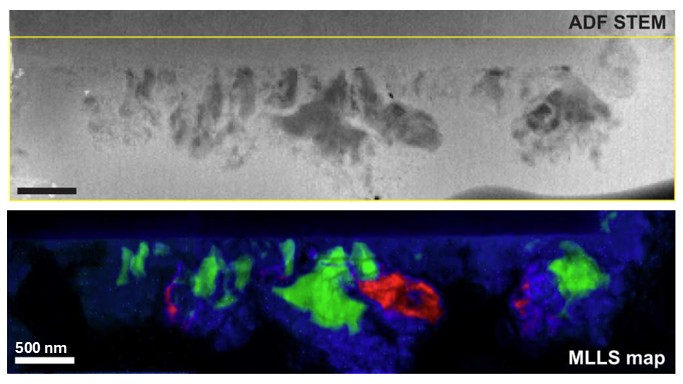
Operando nanoscale observation of dendrite growth and SEI evolution in lithium-ion batteries
SEI formation at the interface of graphite flakes on a Li-ion battery anode in lithium perchlorate (LiClO4) electrolyte solution was characterized by in-situ scanning TEM (STEM) and electron energy loss spectroscopy (EELS).
- The TEM holder enabled operando control of charge/discharge CV cycling.
- The dynamic growth of lithium (Li) and lithium hydride (LiH) dendrites within the SEI layer is captured over two lithiation-delithiation cycles.
- Multilayer Least Squares (MLLS) analysis decomposed the EELS spectra, allowing identification of distinct components.
Reference: Jared Lodico, et al, Science Advances 9 (28) (2023) DOI: 10.1126/sciadv.adg5135
Image copyright © 2023 The Authors, some rights reserved; exclusive licensee American Association for the Advancement of Science. No claim to original U.S. Government Works. Distributed under a Creative Commons Attribution License 4.0 (CC BY).
Liquid-Electrochemical battery processes
Correlate electrochemical performance with nanoscale structural and chemical evolution during battery cycling.
Inert transfer of air-sensitive materials
Preserve pristine battery materials during transfer and characterize their operando electrochemical behavior.
Site-specific contact biasing of battery materials
Perform localized charge-discharge cycling while imaging structural and chemical transformations in battery materials.
Chemical mapping of solid-electrolyte interphase (SEI)
Characterize the chemical composition and evolution of the solid-electrolyte interphase during operando battery cycling.
Browse publications
Communications Materials
Nature Communications
Nature Communications
ECS Meeting Abstracts
Research Spotlight
X-ray chemical maps of LiFePO₄ nanoparticles during charging and discharging. Experimental STXM results and simulated results show strong agreement. Scale bar: 1 μm.
STXM investigation of Li battery particle charging and discharging
Because rechargeable battery degradation is in part due to physical changes in the electrodes caused by electrochemical cycling, optimization of the kinetics and uniformity of ion insertion can extend Li-ion battery lifetimes. The X-ray Generation V Bulk Liquid Electrochemistry sample holder enables reproducible connection of applied charging conditions, electrolyte chemistry, and battery particle morphology to lithiation and delithiation dynamics.
The video shows scanning transmission X-ray microscopy (STXM) sequences of delithation (charging) and lithiation (discharging) processes for several Li-ion battery particles, tracking Fe oxidation states and mapping to Li+ concentration via the exchange current density. Composition dependence of the Li+ insertion rate constant amplifies nonuniformities during delithiation but suppresses them during lithiation, stabilizing the solid solution.
Hummingbird Advantages
- Bulk reference and counter electrodes allow direct extrapolation of observed lithiation/delithiation mechanisms to bulk battery design and chemistry.
- Robust off-chip electrodes minimize electrode degradation over many electrochemical cycles.
Reference: Jongwoo Lim, et al, Science (2016). DOI: 10.1126/science.aaf4914
Video Copyright © 2016, American Association for the Advancement of Science
Why choose Hummingbird Scientific for your research?
Hummingbird Scientific supports in situ and operando battery materials research with flexible microscopy platforms, customizable sample chips, direct scientist support, internal TEM lab expertise, and in-house engineering and manufacturing capabilities.
Broader options for in situ battery materials experiments
Battery materials research spans lithium-ion, sodium-ion, solid-state, multivalent, and next-generation battery chemistries, requiring characterization across liquid and solid-state environments under realistic operating conditions. Hummingbird Scientific supports these applications with TEM, SEM, and X-ray microscopy platforms for liquid-phase electrochemistry, electrical biasing, heating, cryogenic biasing, nanomanipulation, and site-specific electrical measurements. Advanced liquid-cell systems feature off-chip bulk reference and counter electrodes to deliver benchtop-quality three-electrode electrochemistry, while complementary solid-state platforms enable operando studies of battery materials across a wide range of temperatures. Together, these capabilities allow researchers to match the experimental platform to their battery chemistry, operating conditions, and characterization objectives.
More chip choices for experimental flexibility
Microfabricated chip design defines the reaction environment and analytical performance of in situ battery materials characterization. Through our dedicated microfabrication division, Hummingbird develops standard and custom chips for liquid-phase electrochemistry, heating, and electrical biasing, with configurable electrode layouts, materials, spacer thicknesses, window geometries, and sample architectures. Specialized MEMS chips support vacuum biasing and heating experiments from -170 °C to beyond 1000 °C, depending on the holder configuration, while cross-platform compatibility enables the same sample to be analyzed across TEM, SEM, and synchrotron X-ray microscopy.
Scientist support backed by an internal TEM Lab
Battery materials researchers work directly with scientists and technical staff who understand the practical details of in situ and operando TEM workflows. Hummingbird’s internal TEM Lab allows our team to evaluate microscope-facing performance during development, including alignment, handling, imaging stability, sample-environment behavior, and workflow usability under real TEM conditions.
Engineering, production, and custom capability
Hummingbird's in-house capabilities connect engineering, microfabrication, manufacturing, assembly, calibration, and testing within one development process. For battery materials research, that means standard products can be supported by custom chips and holder configurations, and application-specific workflow changes when the experiment requires something more specific.
Liquid-Electrochemical battery processes
Correlate electrochemical performance with nanoscale structural and chemical evolution during battery cycling.
Liquid-Electrochemical battery processes
Strain-associated lithium transport in single crystalline NMC battery particles
Single crystalline LiNi1/3Mn1/3Co1/3O2 (scNMC) particles were characterized using operando scanning transmission X-ray microscopy (STXM) combined with post-cycling Bragg coherent diffraction X-ray imaging to uncover strain-associated lithium transport dynamics.
- Lithium transport occurred counter to concentration gradients.
- Near-uniform yet fluctuating lithium dense and poor regions were observed during cycling.
- Management of lithium-poor surface regions may improve rate performances.
Reference: Danwon Lee, et al, Nature Communications 16, 9018 (2025) DOI: 10.1038/s41467-025-64068-9
Image copyright © 2025 Springer Nature Limited
Inert transfer of air-sensitive materials
Preserve pristine battery materials during transfer and characterize their operando electrochemical behavior.
Inert transfer of air-sensitive materials
Cr-LiF as a High Energy Density Conversion-Type Cathode for Li-ion Solid-State Batteries
Lithiated Cr-LiF thin film transition-metal fluoride cathodes were deposited with a controllable stoichiometric ratio and characterized in-situ during cycling electrical cycling.
- Cr-LiF with a 1:1.2 ratio produced a heterogeneous thin film that outperformed Fe-LiF analogs.
- Operando measurements and first-principles calculations indicate CrF2 is the dominant delithiated phase.
- Capacity falls from 435 mAh/g to only 208 mAh/g over 1500 cycles.
Reference: Joel Casella, et al, Communications Materials 7 113 (2026) DOI: 10.1038/s43246-026-01121-0
Image copyright © 2026 Springer Nature Limited
Site-specific contact biasing of battery materials
Perform localized charge-discharge cycling while imaging structural and chemical transformations in battery materials.
Site-specific contact biasing of battery materials
Liquid metal coating improves cycle performance of lithium metal oxide cathode
The effect of a gallium-based liquid metal (LM) coating on lithium metal LiNi1/3Co1/3Mn1/3O2 (NCM) cathode cycle performance was investigated by characterizing microstructural evolution over many lithation and delithiation cycles.
- Localized contact biasing of the Li metal oxide cathode was performed with LM nanoparticles on the probe.
- The LM coating reduced galvanostatic charge-discharge overpotentials, improving cycle performance.
- The LM layer facilitated the decomposition of dendritic lithium, slowing degradation.
Reference: Supriya Koul, et al, J. Electrochem. Soc. 169 (2) 020542 (2022) DOI: 10.1149/1945-7111/ac4ea5
Image copyright © 2022 The Author(s). Published on behalf of The Electrochemical Society by IOP
Chemical mapping of solid-electrolyte interphase (SEI)
Characterize the chemical composition and evolution of the solid-electrolyte interphase during operando battery cycling.
Chemical mapping of solid-electrolyte interphase (SEI)
Operando nanoscale observation of dendrite growth and SEI evolution in lithium-ion batteries
SEI formation at the interface of graphite flakes on a Li-ion battery anode in lithium perchlorate (LiClO4) electrolyte solution was characterized by in-situ scanning TEM (STEM) and electron energy loss spectroscopy (EELS).
- The TEM holder enabled operando control of charge/discharge CV cycling.
- The dynamic growth of lithium (Li) and lithium hydride (LiH) dendrites within the SEI layer is captured over two lithiation-delithiation cycles.
- Multilayer Least Squares (MLLS) analysis decomposed the EELS spectra, allowing identification of distinct components.
Reference: Jared Lodico, et al, Science Advances 9 (28) (2023) DOI: 10.1126/sciadv.adg5135
Image copyright © 2023 The Authors, some rights reserved; exclusive licensee American Association for the Advancement of Science. No claim to original U.S. Government Works. Distributed under a Creative Commons Attribution License 4.0 (CC BY).
Featured products



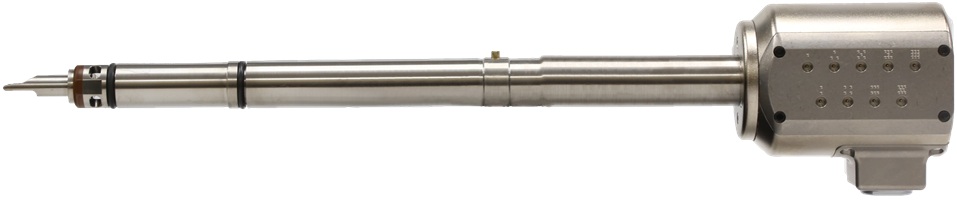
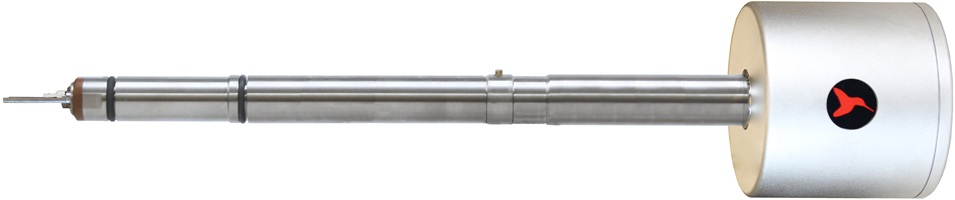

Frequently asked questions
Ready to discuss your experiment?
Talk with an applications scientist to identify the right products for your experiment and request a quote.