
Phase transitions studied using Rigaku electron diffractometer and heating holder
A new application note from Rigaku demonstrates the powerful combination of their XtaLAB Synergy electron diffractometer (ED) and the Hummingbird Scientific in-situ MEMS biasing + heating TEM sample holder. The tools were used together to study heat-induced phase transitions in metal-organic frameworks at elevated temperatures, with the Hummingbird holder now available for purchase through Rigaku.
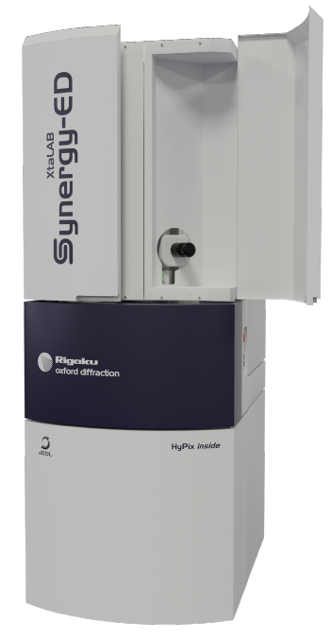
Researchers used the heating capability of the holder to raise a copper triazolate MOF from 25°C to 200°C directly inside the Rigaku electron diffractometer. This enabled atomic-resolution imaging of the same 400nm crystal at both temperatures, allowing direct observation of the α to β phase transition. The holder’s compact design provides a wide ±75° tilt range, enabling complete 3D diffraction data collection while heating the sample. The XtaLAB Synergy-ED has revolutionized MOF sample analysis by enabling single-crystal analysis without the need for large samples or complex crystallization.
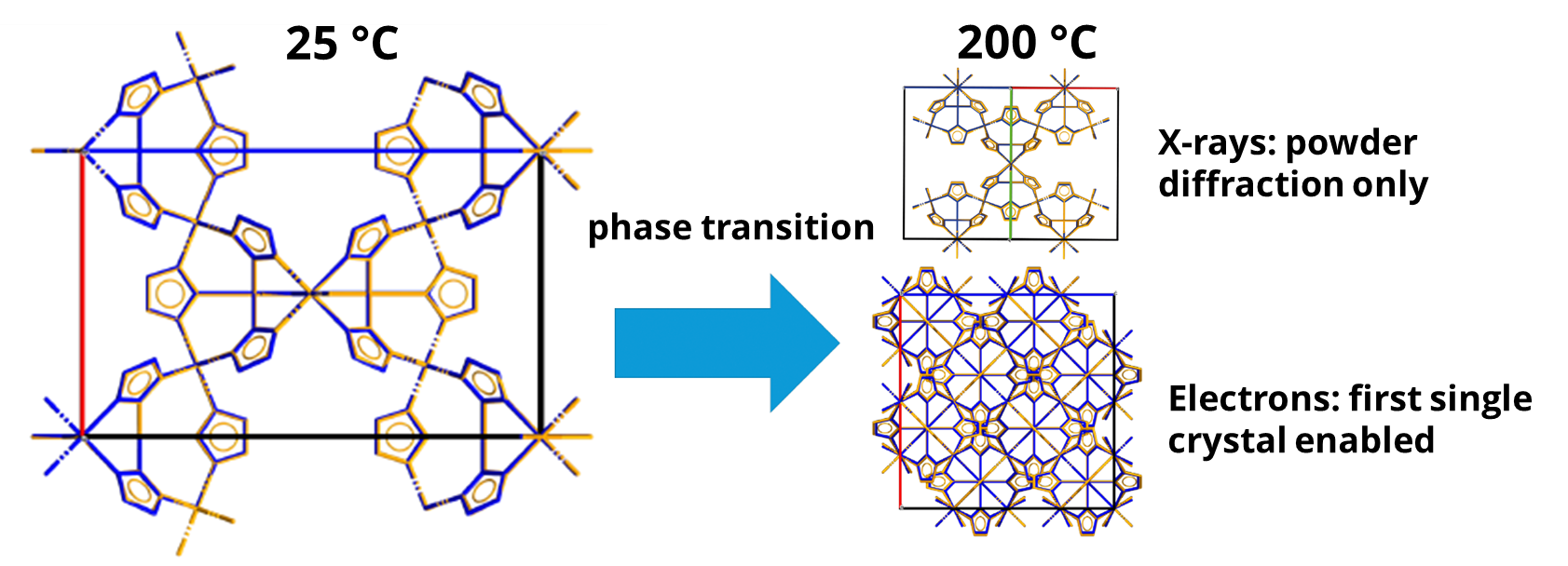
Results match well with previous powder and single crystal X-ray diffraction (PXRD, SCXRD) data, confirming the α to β phase transition previously observed and demonstrating diffraction can reliably probe MOF phase transitions. Moreover, the workflow expanded structural knowledge by providing the first single-crystal data for Cu(ta2)’s high-temperature β-phase.
Specialized holders like the Hummingbird Scientific device provide new opportunities for studying temperature-sensitive materials at the nano/atomic scale operando. This creates exciting opportunities for better understanding the phase transitions in other metal-organic frameworks and related porous materials.
Reference:
Rigaku application note NO. SMX041
Copyright © 2023 Rigaku Corporation