Apply calibrated in-plane magnetic fields up to 900 Gauss during in-situ TEM, Lorentz TEM, and electron holography to correlate magnetic field stimuli with nanoscale structural and magnetic evolution

The Hummingbird Scientific TEM Magnetizing Sample Holder enables the application of calibrated in-plane magnetic fields during in-situ TEM, STEM, Lorentz TEM, and electron holography experiments. Designed for researchers in magnetism, spintronics, quantum materials, materials science, and nanotechnology, it supports investigations of magnetic domain dynamics, magnetization reversal, domain wall motion, skyrmions, magnetic vortices, spin textures, and other field-driven phenomena. By correlating controlled magnetic field stimuli with structural and magnetic evolution, researchers can reveal the mechanisms governing magnetic switching, hysteresis, stability, and material performance at the nanoscale.
Hummingbird Advantages:
- Apply calibrated deflection-compensated in-plane magnetic fields up to ±300 Gauss directly to a specimen during in-situ TEM imaging.
- Maintain stable, high-resolution imaging with unique passive beam deflection compensation during magnetic field application.
- Perform TEM/STEM, Lorentz TEM, and electron holography using a single integrated magnetizing platform.
- Measure the actual magnetic field at the specimen with a current-calibrated field sensor for reproducible experiments.
- Observe magnetic domain dynamics, magnetization reversal, and other field-driven transformations in real time.
- Large viewing-area magnetizing chips optimized for Lorentz TEM and low-magnification magnetic imaging.
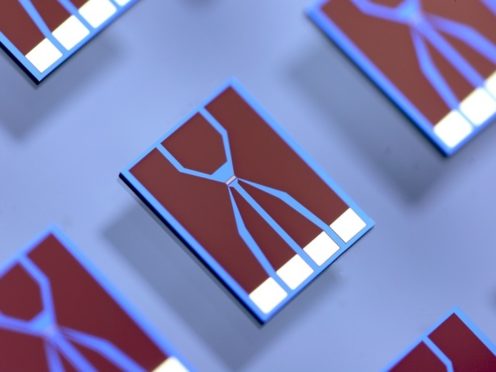
- In-house microfabricated magnetizing chips available from stock, with custom chip development for specialized magnetic materials and devices.
Available For:

.jpg)

How it Works
The TEM Magnetizing Sample Holder integrates magnetic field generation, field measurement, and dedicated control hardware into a unified platform for in-situ magnetic field experiments inside the TEM. Samples are first mounted onto compatible microfabricated chips, which are then inserted into the holder. An integrated electromagnet generates calibrated in-plane magnetic fields of up to ±300 Gauss directly at the specimen while imaging inside the TEM.
The applied magnetic field is continuously measured at the specimen using a built-in calibrated sensor, ensuring accurate field strength measurement throughout the experiment. Researchers can precisely control and cycle the magnetic field to study magnetic switching, domain wall motion, magnetization reversal, spin textures, and other field-driven phenomena in real time. A passive beam deflection compensation system counteracts field-induced electron beam distortion providing a usable range of ±300 Gauss of applied field for imaging, preserving stable TEM/STEM imaging and enabling high-quality TEM, Lorentz TEM, and electron holography during magnetic field application.
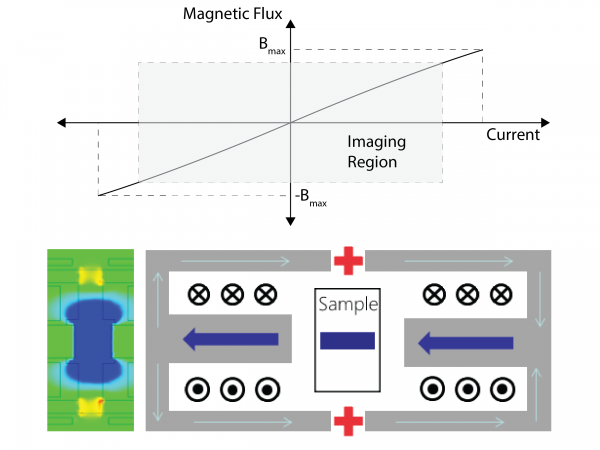
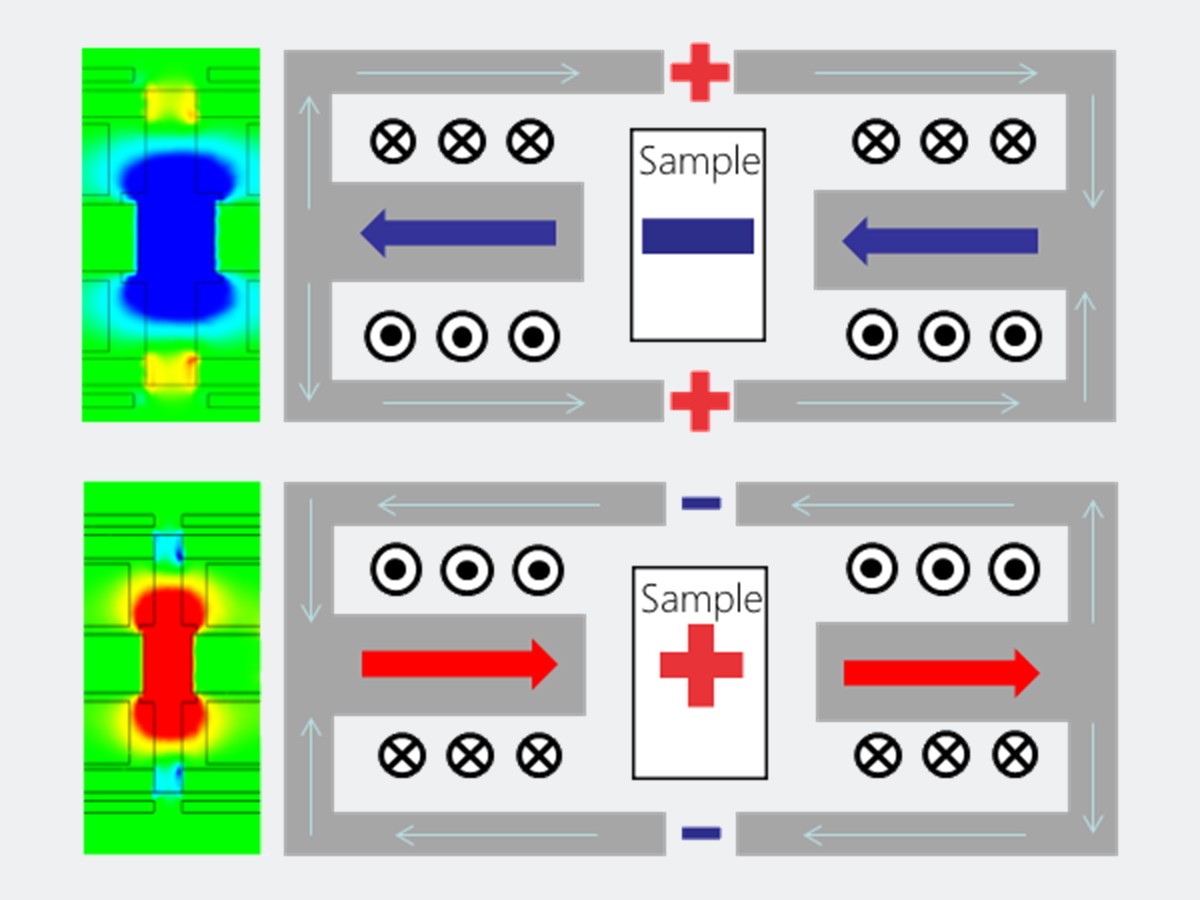
Image: (Top) Graph illustrating the maximum applied magnetic field and the maximum field at which imaging is possible. (Bottom) Schematic showing the magnetic field lines for negative applied field. The magnetic compensation circuit guides the field around and applies an opposite field above and below the sample position. Colored image to the left shows FEA results of the magnetic fields at the sample.
Key Features and Capabilities
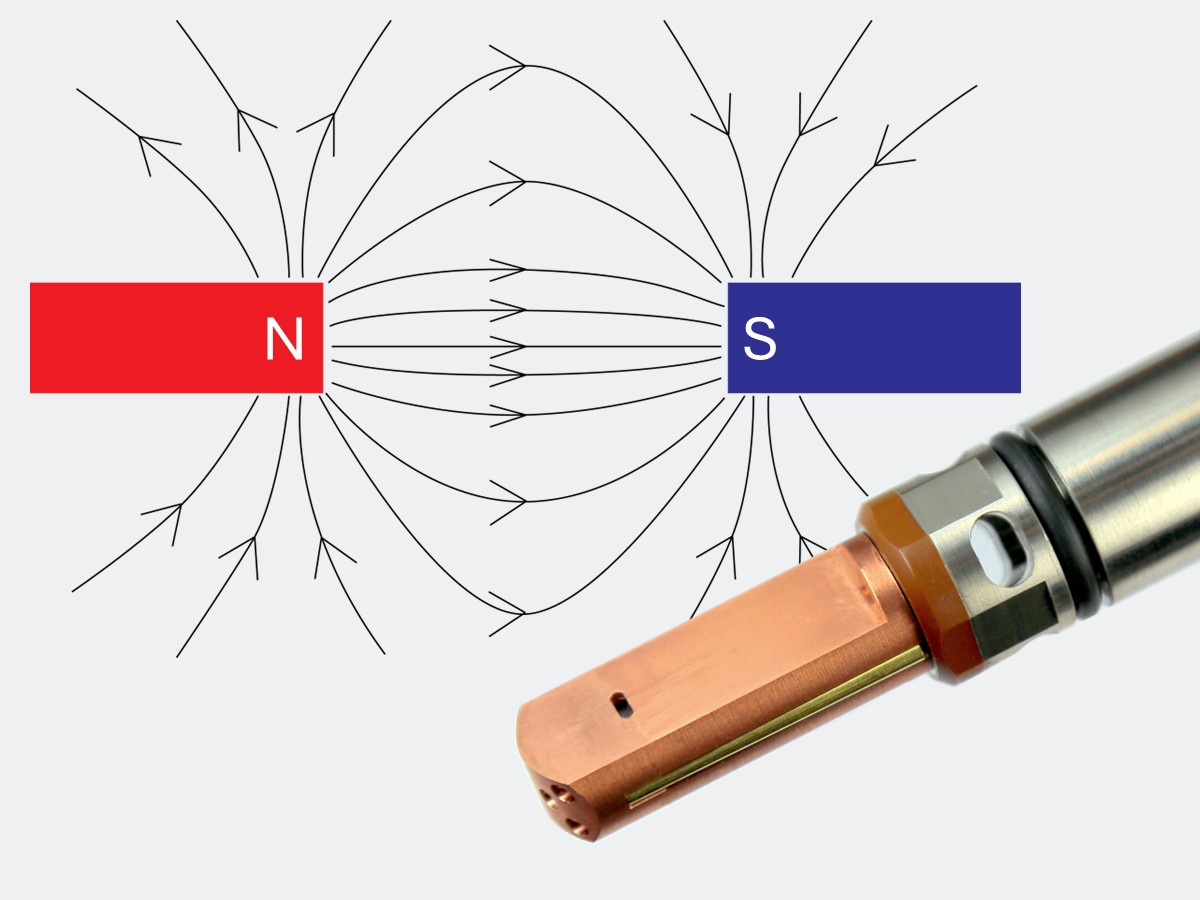
Generate precisely controlled in-plane magnetic fields of up to ±300 Gauss directly at the specimen during TEM and STEM imaging
Maintain stable TEM imaging during magnetic field application with passive compensation of field-induced electron beam deflection

Accelerate magnetic TEM experiments with compatible magnetizing chips that are in stock and ready to ship
Built for Diverse Research Applications

Featured Research
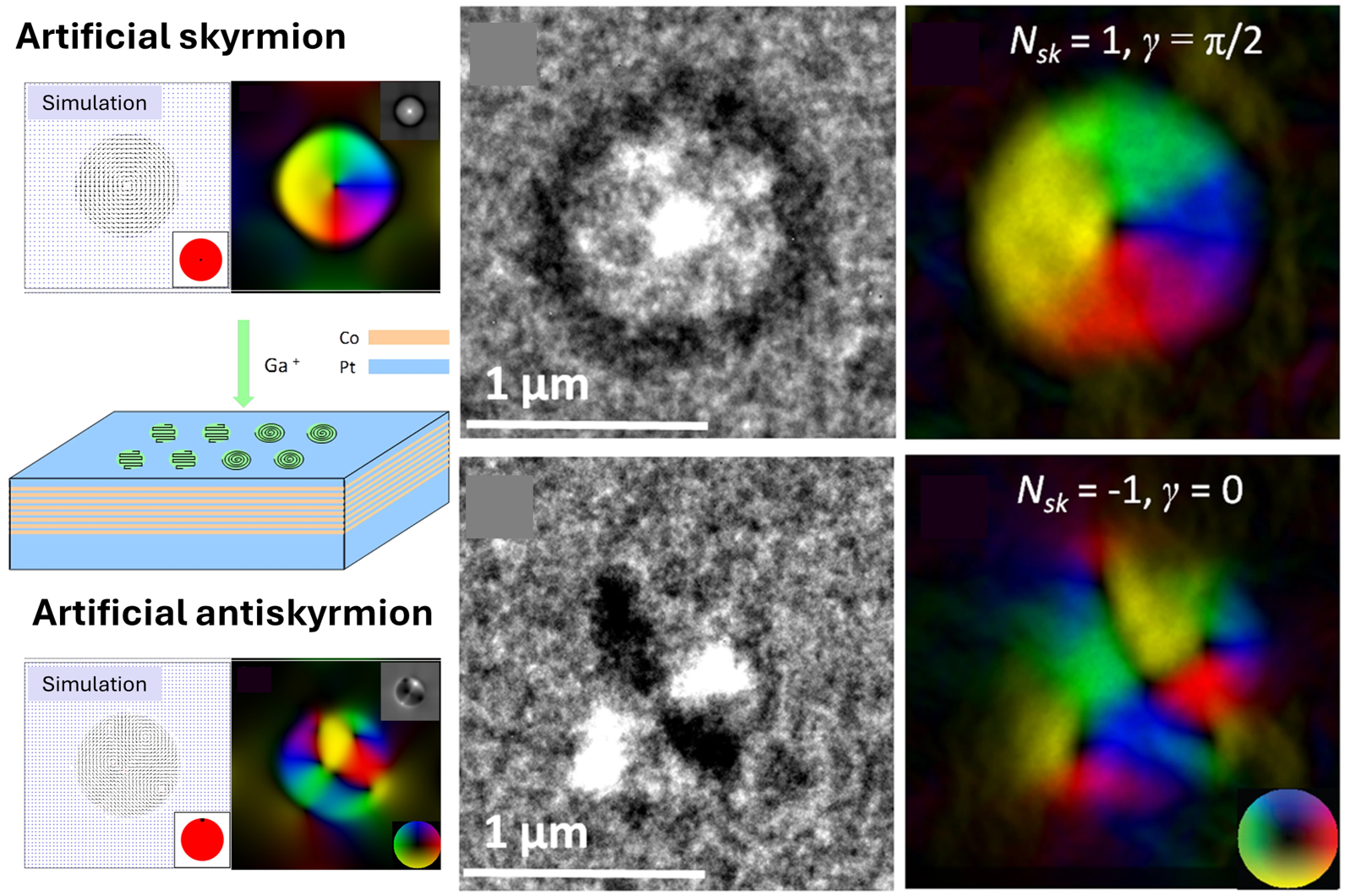
Comparison of simulated (left) artificial skyrmions and antiskyrmions to real skyrmion (top)and antiskyrmion (bottom) domains imaged using Lorentz TEM. Inset schematic illustrates artificial engineering process using ion irradiation.
Artificial skyrmions and antiskyrmions in Co/Pt multilayers observed by in-situ magnetizing Lorentz TEM
The Hummingbird Scientific TEM Magnetizing sample holder was used to investigate the magnetic stability and reversal behavior of artificially engineered skyrmions and antiskyrmions in ion-irradiated Co/Pt multilayer films. Combining in-situ magnetic field application with aberration-corrected Lorentz TEM, researchers directly observed the formation, evolution, and switching of topologically non-trivial spin textures under applied magnetic fields at room temperature. The holder enabled controlled manipulation of magnetic states while maintaining high-quality imaging, revealing how dipolar interactions stabilize artificial skyrmions and antiskyrmions without requiring Dzyaloshinskii–Moriya (DM) interactions. These observations provided key insight into the magnetic behavior of engineered spin textures relevant to future spintronic and magnonic devices.
Reference: S. Zhang, et al. Scientific Reports (2016). DOI: 10.1038/srep31248
Copyright © 2016 The Author(s). Published by SpringerNature. This article is distributed under the terms of the Creative CommonsAttribution 4.0 International License (CC BY 4.0).
Built on Engineering Excellence
Hummingbird Scientific designs, machines, assembles, tests, and services its products in-house. Our integrated engineering, machining, microfabrication, software development, applications, and service teams enable rapid rapid prototyping and iteration, custom modifications, and direct technical support throughout the life of the instrument. This vertically integrated approach allows researchers to adapt experimental platforms to unique scientific requirements while maintaining the performance and reliability required for advanced in-situ microscopy experiments.
The TEM Magnetizing Sample Holder is a direct result of these capabilities, bringing calibrated magnetic field control and passive beam deflection compensation together in a single experimental in-situ TEM platform.
Need something unique? Our engineers can customize existing products or develop entirely new solutions to support specialized experiments and emerging research challenges.
Frequently Asked Questions
Related Products

Customization and Service