Observe dynamic liquid-phase processes in real time with controlled microfluidic flow, nanometer resolution TEM/STEM imaging, integrated MEMS heating and biasing, and optional dual-inlet solution mixing

The Hummingbird Scientific TEM Liquid Flow Sample Holder is a modular in situ liquid-cell platform that enables researchers to observe dynamic processes in controlled liquid environments with nanometer-resolution TEM and STEM imaging. Designed for researchers in materials science, chemistry, energy storage, catalysis, environmental science, and life sciences, the platform supports real-time investigation of nanoparticle growth, crystallization, corrosion, electrochemical reactions, biomolecular interactions, and other liquid-phase phenomena. Supporting continuous flow and static liquid experiments, as well as electrical biasing and liquid electrochemistry, the platform can be expanded with optional dual-inlet solution mixing and MEMS heating, providing a flexible solution that adapts to evolving research needs.
Hummingbird Advantages:
- Features screw-free liquid-cell assembly with self-aligning windows for fast, reproducible sample loading.
- Removable sample tip and fully user-replaceable tubing for easy cleaning and functional upgrades.
- Maintain stable, near-drift-free nanoscale imaging during extended liquid-phase experiments.
- Correlate nanoscale structural evolution with temperature, electrical biasing, and electrochemical measurements using compatible microfabricated chips.
- Use the same liquid-flow tip across Hummingbird Scientific TEM, SEM, and X-ray microscopy platforms for easy cross-correlative workflows.
- Supports diverse applications including nanoparticle growth, crystallization, catalysis, corrosion, electrochemistry, and biomaterials research.
Available For:



.jpg)

How it Works
The TEM Liquid Flow Sample Holder uses an enclosed microfluidic liquid cell to maintain a controlled liquid environment inside the high vacuum of the TEM. The liquid cell is formed by two silicon microchips with electron-transparent silicon nitride (SiN) windows that encapsulate a thin liquid layer while allowing the electron beam to pass through for nanoscale TEM and STEM imaging.
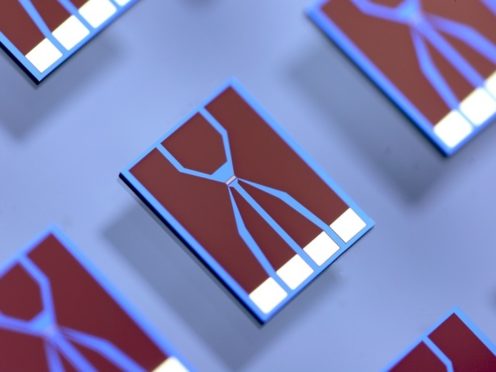
A precision-engineered, screw-free chip loading and compression-sealing mechanism ensures reproducible liquid cell assembly and self-alignment of the imaging windows, resulting in highly reproducible experiments. The holder is also compatible with specialized microfabricated chips for MEMS heating, electrical biasing, and liquid electrochemistry, enabling multiple in-situ techniques on the same liquid flow platform.
Liquid is delivered to the holder tip through replaceable flexible microfluidic tubing. The standard configuration supports both static and continuous liquid flow, while an optional dual-inlet configuration enables two independent solutions to mix immediately before the imaging region. Continuous flow refreshes the liquid environment during the experiment, enabling reagent exchange, removal of reaction by-products, and real-time observation of dynamic liquid-phase processes.
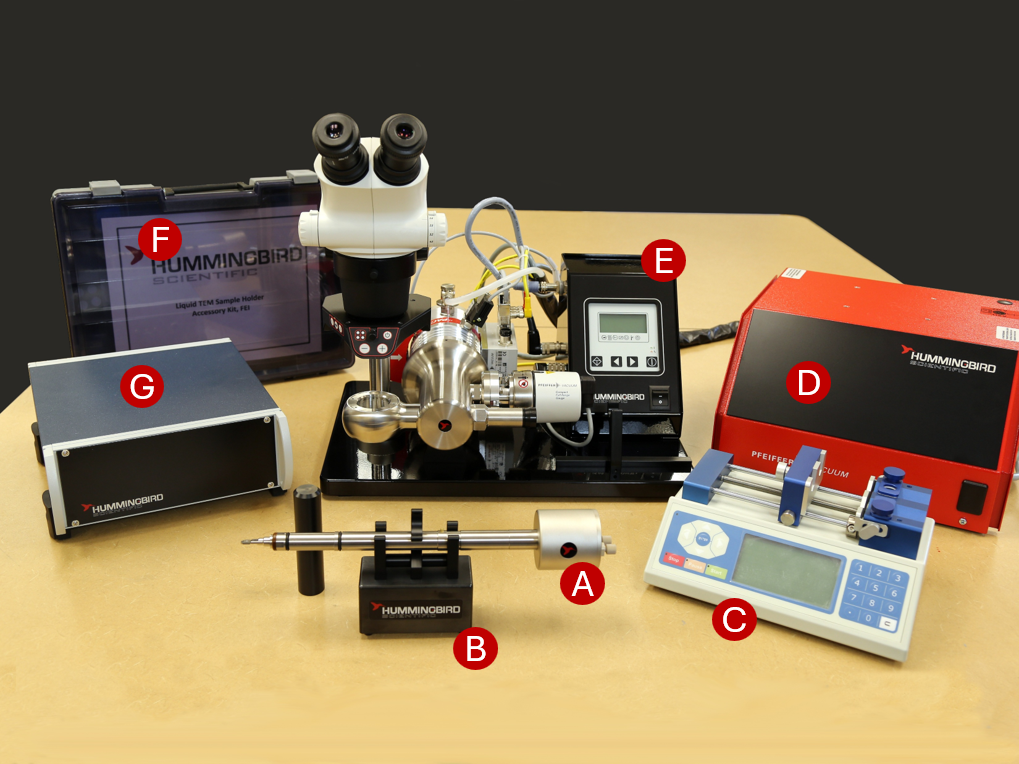
Image: a) TEM Liquid Flow Sample Holder, b) Liquid holder stand, c) Microfluidics syringe pump, d) High-vacuum pump, e) Seal checking station with integrated microscope, f) Liquid holder accessory kit, g) Optional thin film liquid heating controller.
Key Features and Capabilities

Achieve reproducible liquid-cell assembly with self-aligning windows and a screw-free sealing design
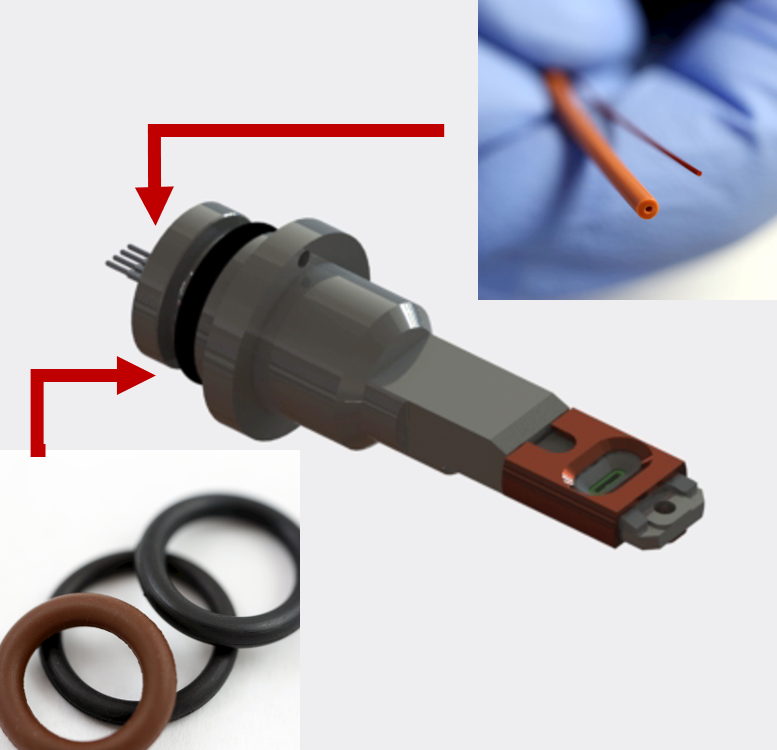
Simplify cleaning with removable and upgradeable holder tips that allow user access for full tubing replacement
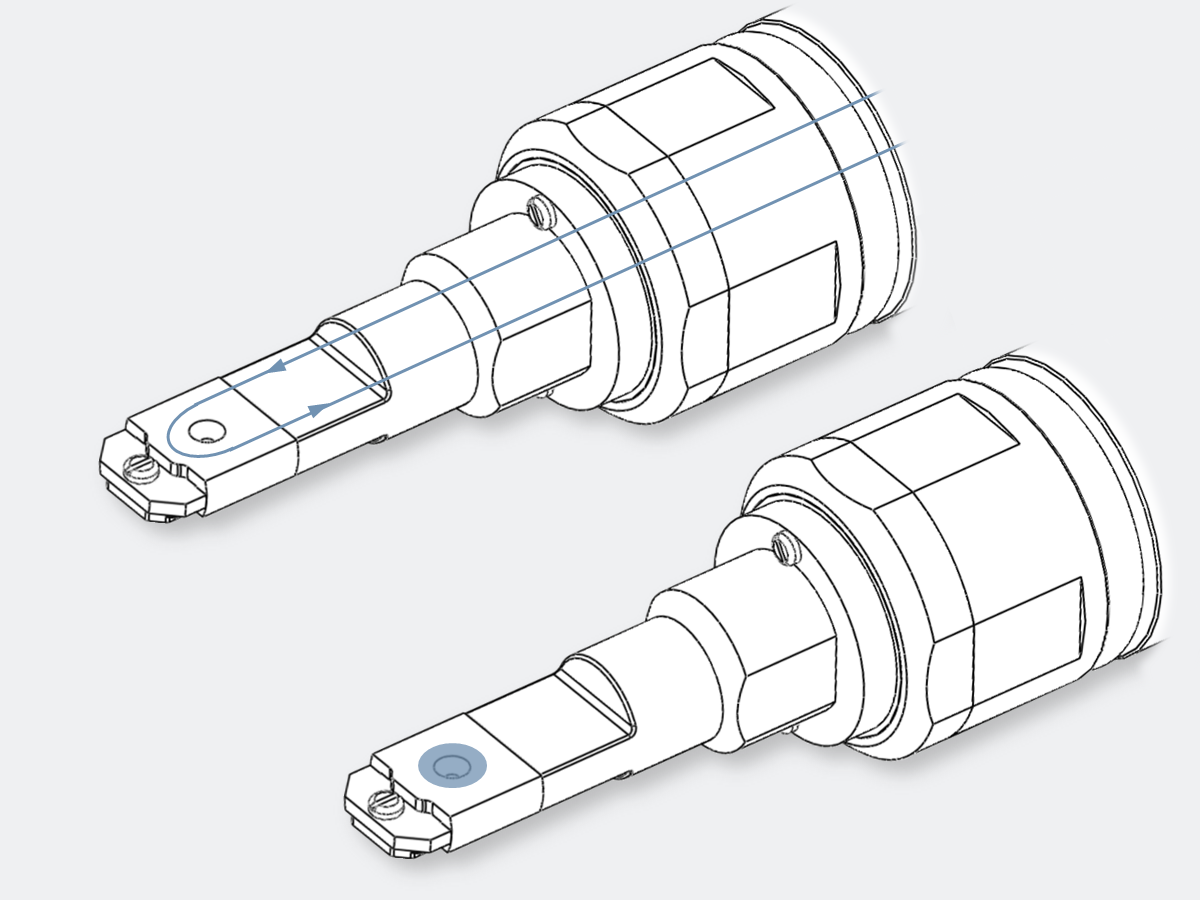
Image samples in continuous-flow or static liquid environments using a sealed microfluidic chip assembly

Correlate electrochemical, heating, and imaging data across TEM, SEM, and X-ray microscopy platforms

Perform correlative spectroscopy and microscopy for detailed in-situ elemental analysis

Protect your TEM during liquid-cell experiments and streamline setup with rapid high-vacuum seal checking and optical inspection

Keep experiments moving with in-stock liquid-cell TEM chips designed for electrochemistry, liquid flow, heating, and multimodal microscopy workflows
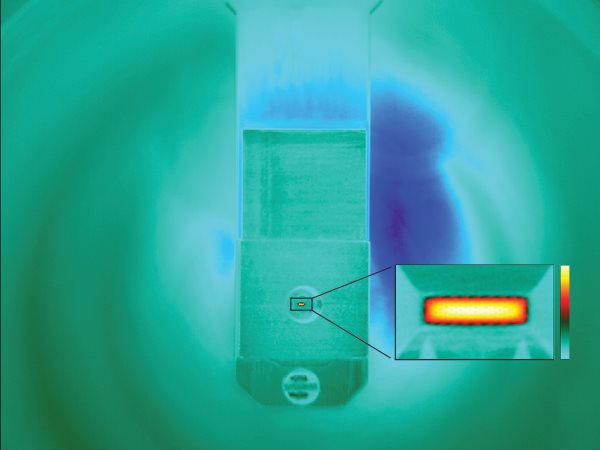
Add temperature-controlled liquid-phase TEM capabilities with homogeneous heating, precise temperature regulation, and near-drift-free in-situ imaging

Accelerate discovery with dual-flow liquid mixing for in-situ liquid phase TEM, capturing dynamic liquid-liquid reactions with greater control and flexibility
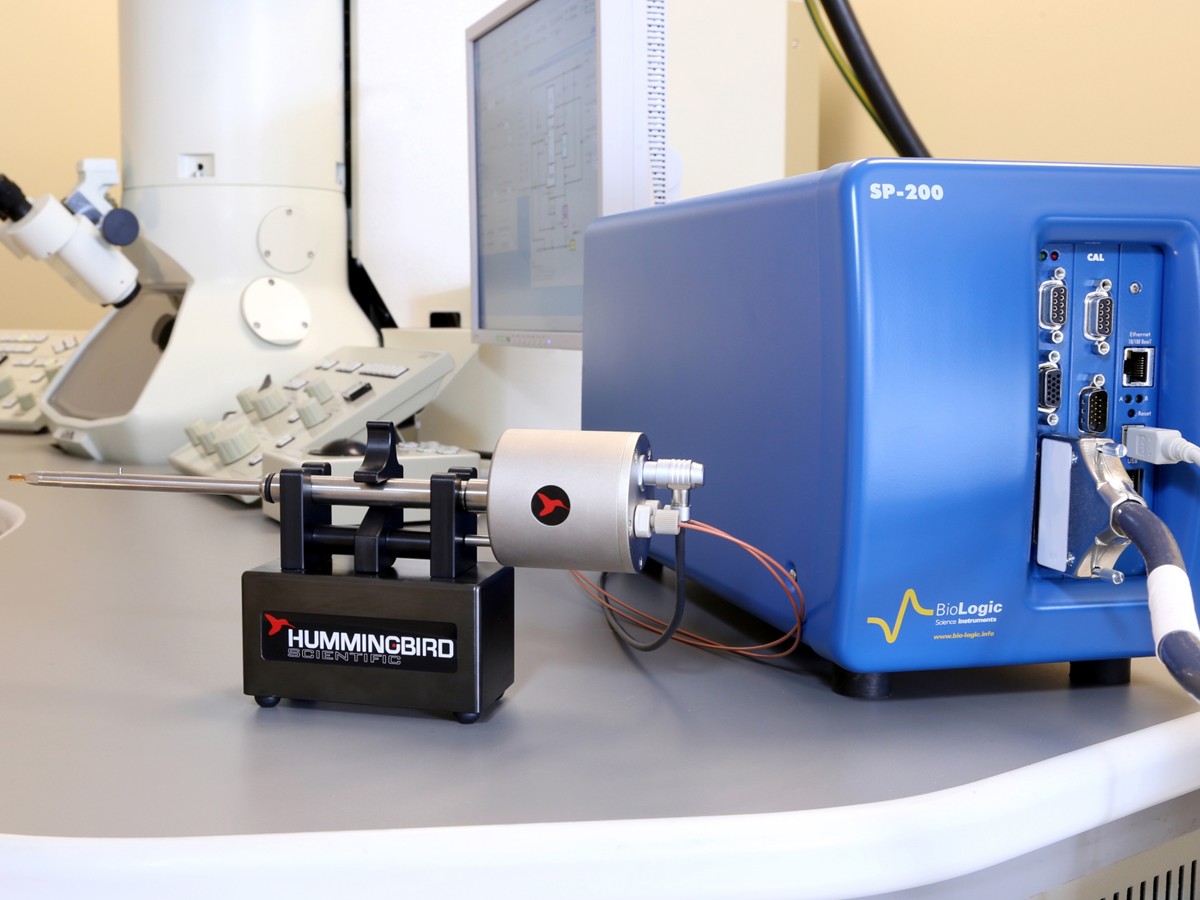
Expand the capabilities of the TEM Liquid Flow Sample Holder with the BioLogic SP-200 potentiostat for quantitative in-situ TEM electrochemistry
Built for Diverse Research Applications


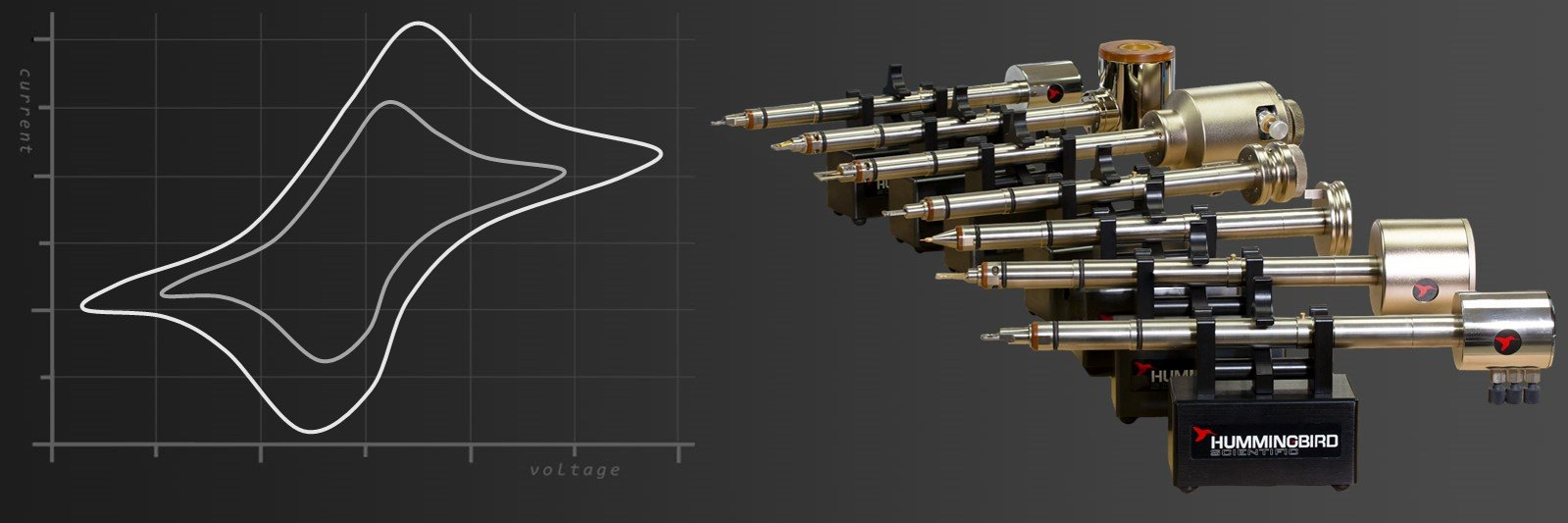
Featured Research
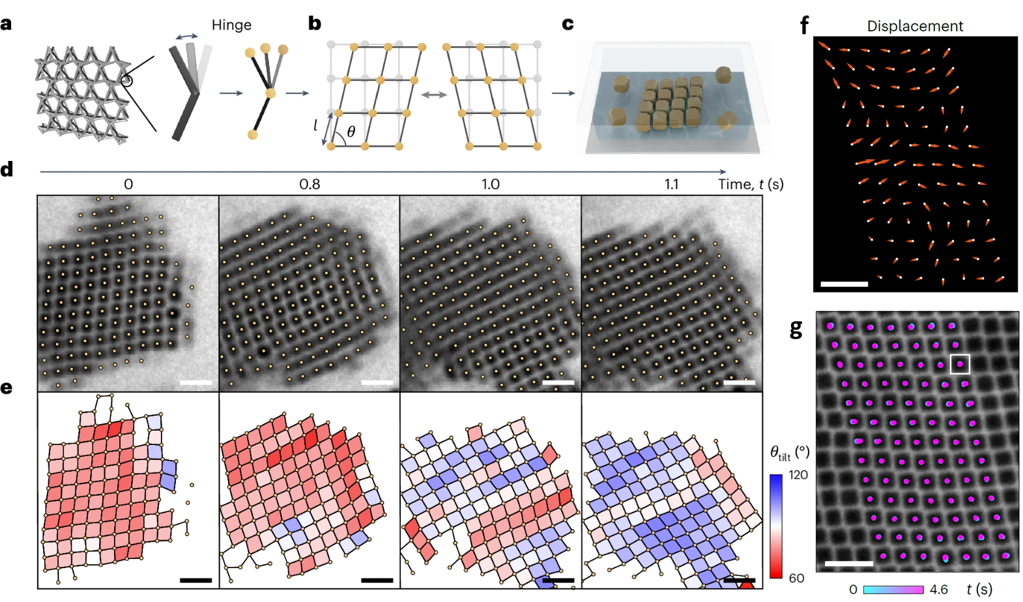
a) Schematics of macroscopic Maxwell lattices and a hinge exhibiting rotational freedom. b) Schematic of a rhombic lattice with structural degeneracy. c) Self-assembly of gold nanocubes into a rhombic Maxwell lattice in via liquid-phase TEM. Time-lapse liquid-phase TEM images overlaid with d) tracked NP centroids and e) the bond network describing the angle at which each rhombus leans. Scale bars, 150 nm. f) Drift-corrected trajectory mapped over a selected region of a stable rhombus lattice. g) Example of the instantaneous displacement of the NPs in one frame. Scale bars, 200 nm.
Direct imaging of phonon dynamics in self-assembled nanoparticle lattices using liquid-phase TEM
The Hummingbird Scientific TEM Liquid Flow sample holder enabled liquid-phase TEM imaging of self-assembled gold nanoparticle lattices to directly measure nanoscale phonon dynamics and lattice mechanics in solution. Using flowing liquid within a sealed microfluidic TEM environment, researchers tracked the thermally driven vibrations of gold nanocubes, nanorods, and nanoprisms with sub-nanometer precision, creating a phonon-mode nanoscopy (PMN) platform. The holder allowed real-time observation of particle motion, lattice reconfiguration, and collective phonon modes inaccessible by conventional techniques. By correlating nanoparticle trajectories with mechanical models, the study quantified phonon band structures, spring constants, and topological floppy modes, establishing self-assembled nanoparticle lattices as a new class of tunable mechanical metamaterials.
Reference: Chang Qian, et al. Nature Materials (2025). DOI: 10.1038/s41563-025-02253-3
Copyright © The Author(s), under exclusive licence toSpringer Nature Limited 2025.
Video Spotlight
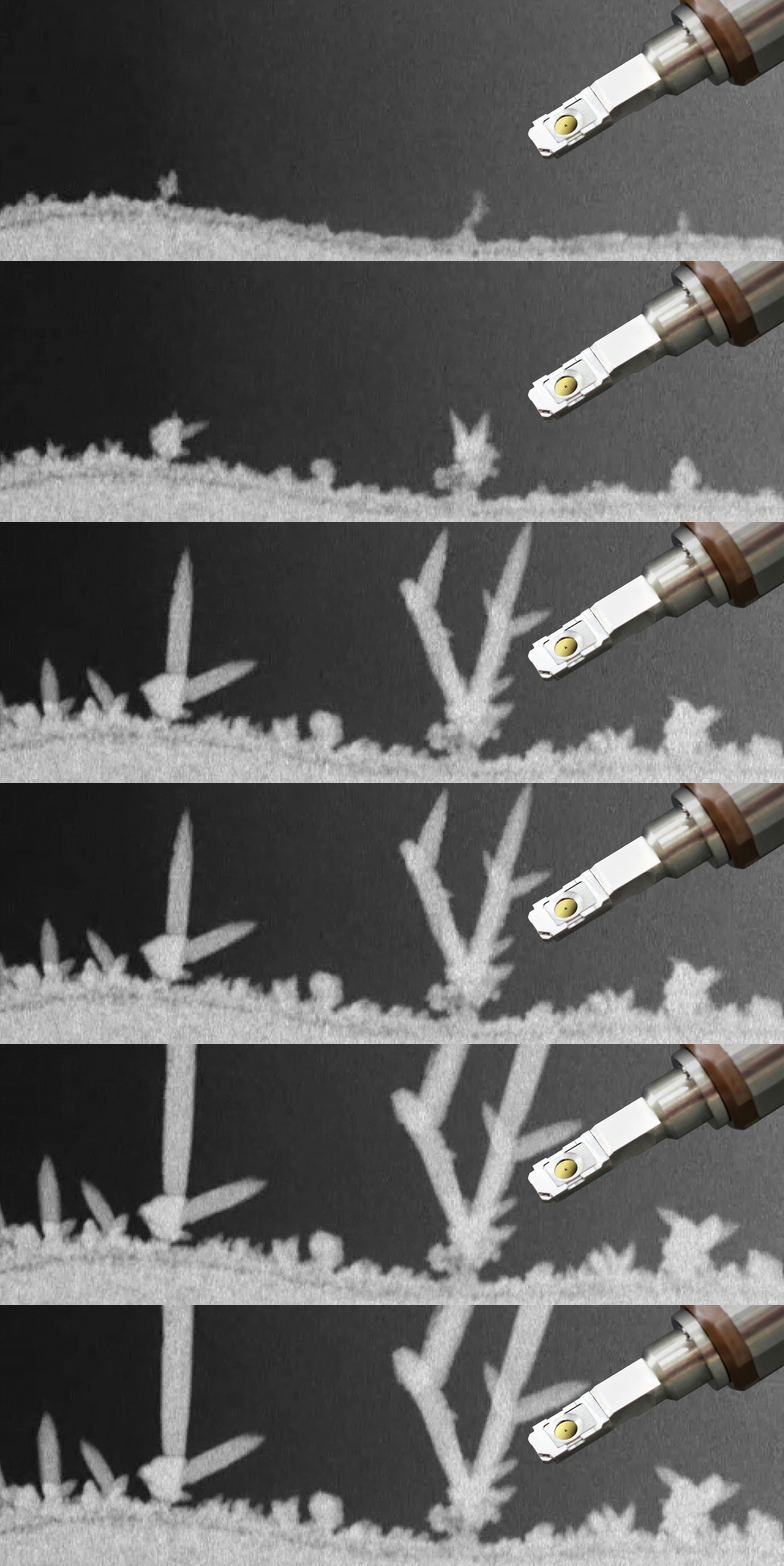
Kirkendall effect in Ag nanocubes in solution with Au ions at 23 °C. Nanocubes become hollow via the nucleation, growth, and coalescence of voids formed by galvanic replacement.
Ag nanocubes undergo nanoscale galvanic replacement reactions at elevated temperature
The Hummingbird Scientific TEM Liquid Flow platform was used along with the heating add-on to confirm the nucleation, growth, and coalescence of voids inside Ag nanocubes due to the galvanic replacement (GR) reaction with Au introduced into the solution at different temperatures. The Ag nanocube suspension was drop cast onto the heater chip and sealed into the liquid cell. The Ag nanocubes were stable up to 90 °C during imaging, but once a solution containing Au ions was introduced into the cell via the liquid delivery system, the GR reaction initiates as low as 23 °C.
Hummingbird Advantage
- Flexible synchronization of solution chemistry changes, temperature, and imaging
- Stable, drift free imaging at elevated temperatures with short settling times
- Mechanistic linkage between observed transformation and solution chemistry
See Wee Chee, et al, Nature Communications (2017). DOI: 10.1038/s41467-017-01175-2
Video Copyright © 2017 Macmillan Publishers Limited, part of Springer Nature
Software
Spend less time managing equipment and more time generating results. Hummingbird Connect integrates with microscope and laboratory software platforms to simplify experiment setup, streamline workflows, and keep your data organized from acquisition through analysis.
To help you get the most from your liquid-cell holder, Hummingbird Control Software provides intuitive and precise control of closed loop liquid heating. Together, these software solutions enable faster setup, improved reproducibility, and more efficient liquid-phase and electrochemical TEM experiments.
Built on Engineering Excellence
Hummingbird Scientific designs, machines, assembles, tests, and services its products in-house. Our integrated engineering, machining, microfabrication, software development, and applications teams enable rapid prototyping and iteration, custom modifications, and direct technical support throughout the life of the instrument. This vertically integrated approach allows researchers to adapt experimental platforms to unique scientific requirements while maintaining the performance and reliability required for advanced in-situ microscopy experiments.
The TEM Liquid Flow Sample Holder is a direct result of these capabilities, enabling reproducible in-situ liquid-phase imaging with optional MEMS heating, electrical biasing, electrochemistry, and dual-inlet liquid mixing on a single platform.
Need something unique? Our engineers can customize existing products or develop entirely new solutions to support specialized experiments and emerging research challenges.
Frequently Asked Questions
Related Products

Awards

FLC Award for Excellence in Technology Transfer

Tibbetts Award

Microscopy Today 2012 Innovation Award

Customization and Service