ACS Nano
Acta Materialia
Nano Letters
Applied Physics Letters
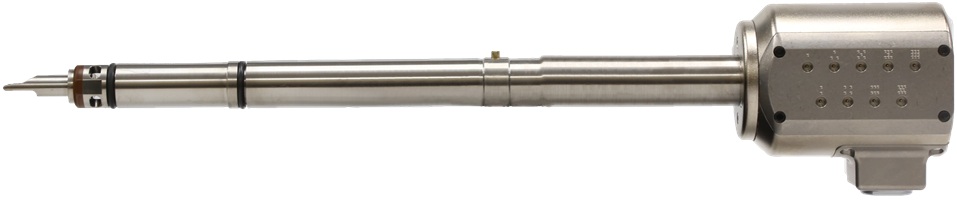
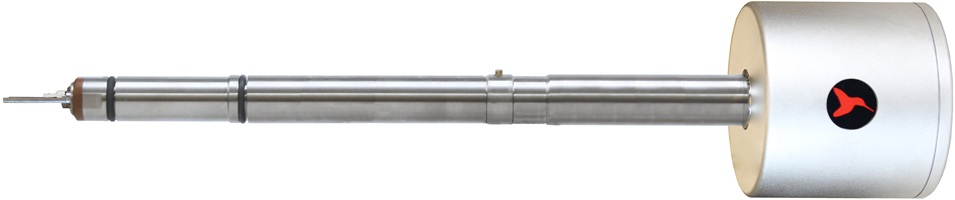
The Hummingbird Scientific TEM MEMS Heating + Biasing Sample Holder enables simultaneous high-temperature heating and electrical biasing during in-situ TEM experiments. Microfabricated MEMS chips deliver closed-loop heating above 1000 °C with on-chip temperature sensing, while nine direct-chip electrical contacts support electrical biasing and measurements. Single- and double-tilt configurations provide orientability for a wide range of in-situ materials and device characterization workflows.
The system supports operando studies of semiconductor devices, battery materials, catalysts, phase-change materials, low-dimensional materials, nanoparticles, and thin films. Simultaneous heating and electrical biasing enable direct correlation of nanoscale structural, chemical, and electrical changes during phase transformations, electrical transport, nanoscale diffusion, and failure analysis.
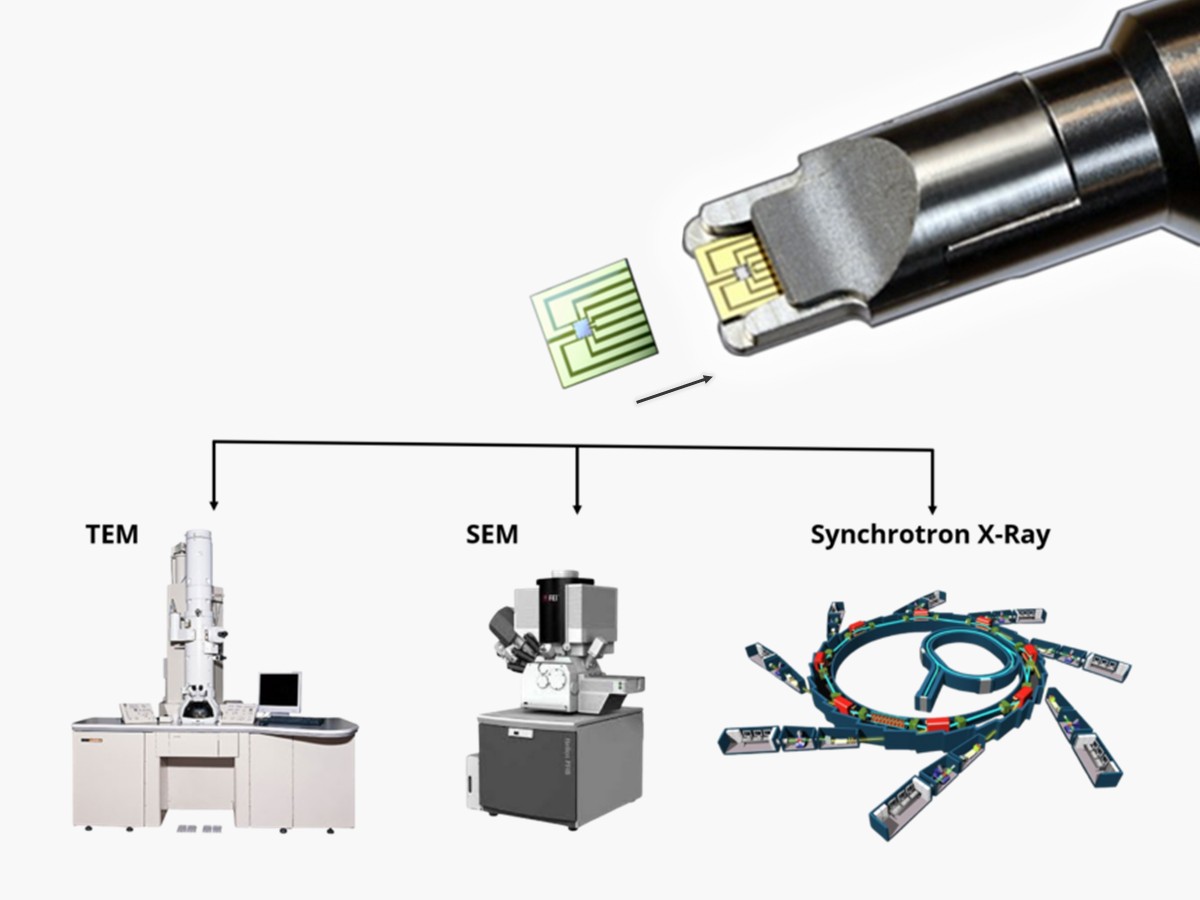
From routine characterization to application-specific experiments, the platform is engineered to expand experimental capability as research evolves. Screw-free direct MEMS chip insertion streamlines sample loading. Standard MEMS Heating, Electrical Biasing, Heating + Biasing, and FIB lift-out MEMS chips support a broad range of experimental requirements, while cross-compatible MEMS chips enable seamless workflows across Hummingbird's TEM, SEM, and synchrotron X-ray platforms. Custom MEMS chip designs further expand the platform to support emerging materials, novel device architectures, and specialized in-situ applications.

The TEM MEMS Heating + Biasing Sample Holder combines Hummingbird Scientific's in-house microfabricated MEMS chips, direct electrical contacts, and closed-loop temperature control to create a stable platform for simultaneous in-situ heating and electrical biasing inside the TEM. Samples are mounted directly onto a MEMS chip and inserted into the holder using a screw-free loading mechanism, enabling fast, reproducible experiment setup.
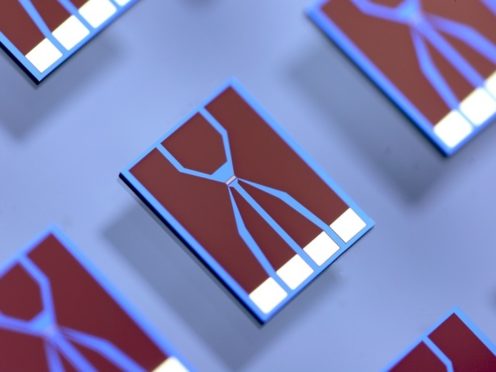
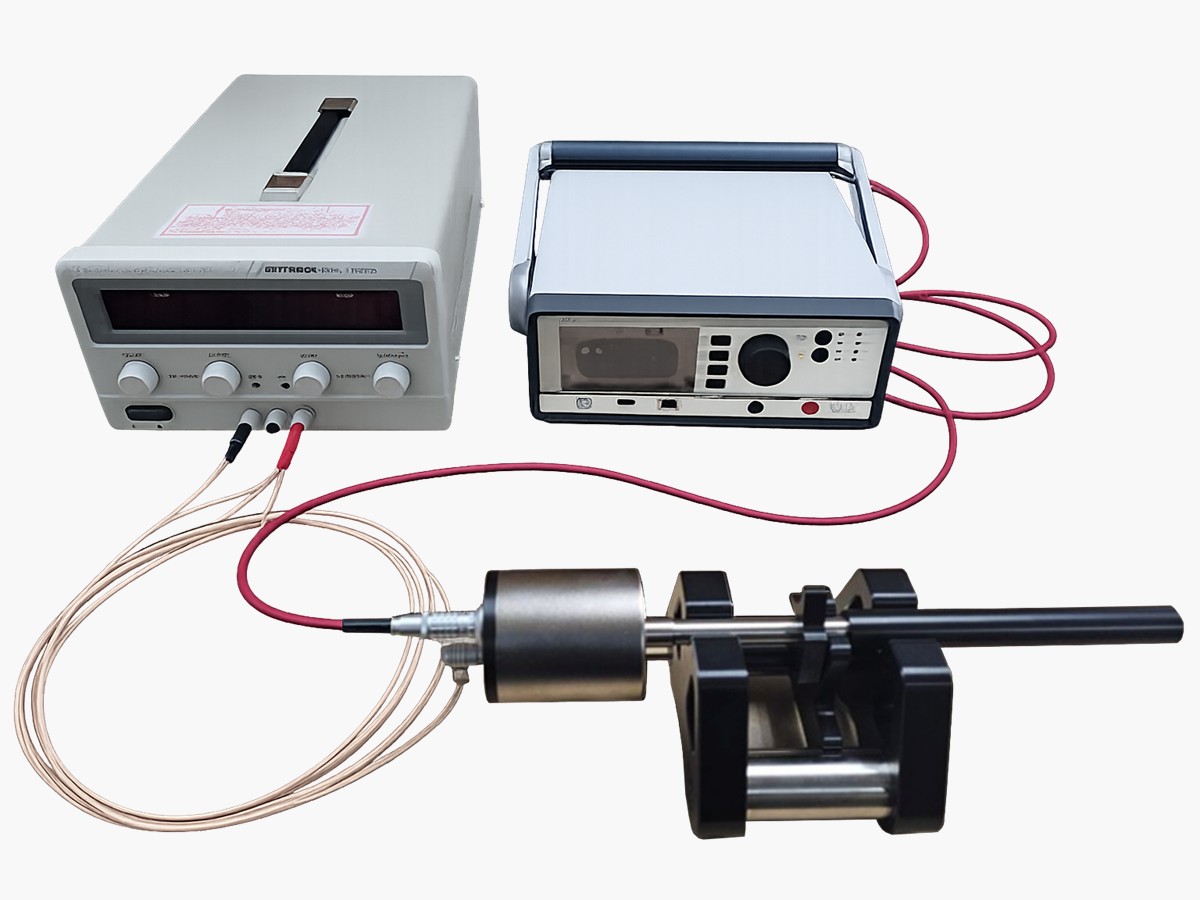
During operation, the MEMS microheater delivers temperatures up to above 1000 °C, while on-chip 4-point resistance sensing enables closed-loop temperature control for stable real-time imaging and analysis. Heating + Biasing MEMS chips support simultaneous thermal and electrical stimulation, while biasing MEMS chips dedicate all nine contacts to electrical measurements when heating is not required.
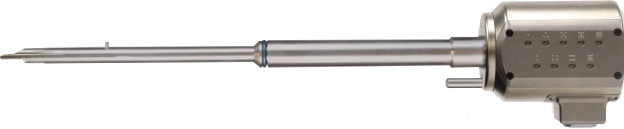
The double-tilt configuration adds high-accuracy beta tilt controlled by dedicated tilting software, enabling precise sample orientation for diffraction, crystallographic, and analytical in-situ TEM experiments.

Load MEMS chips quickly with reliable electrical contact and simplified experiment setup
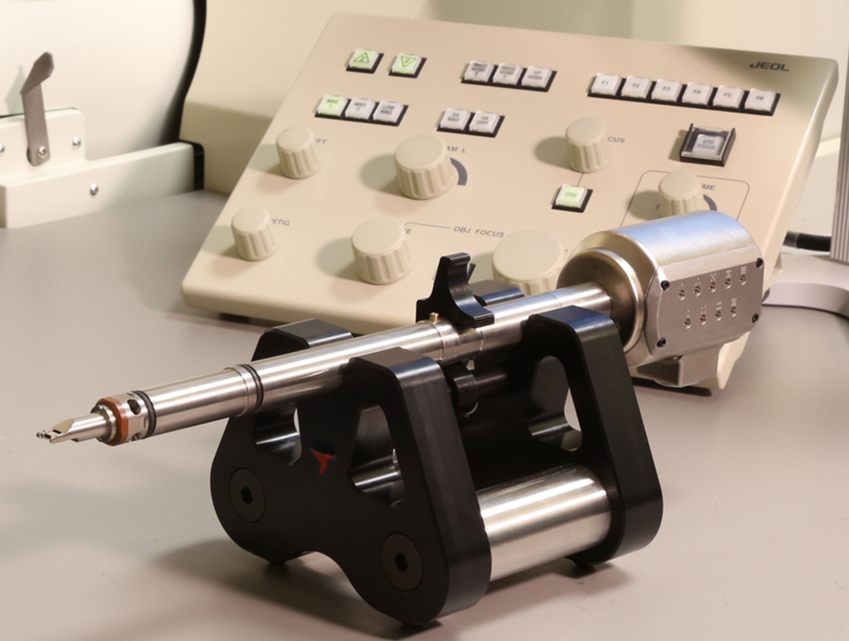
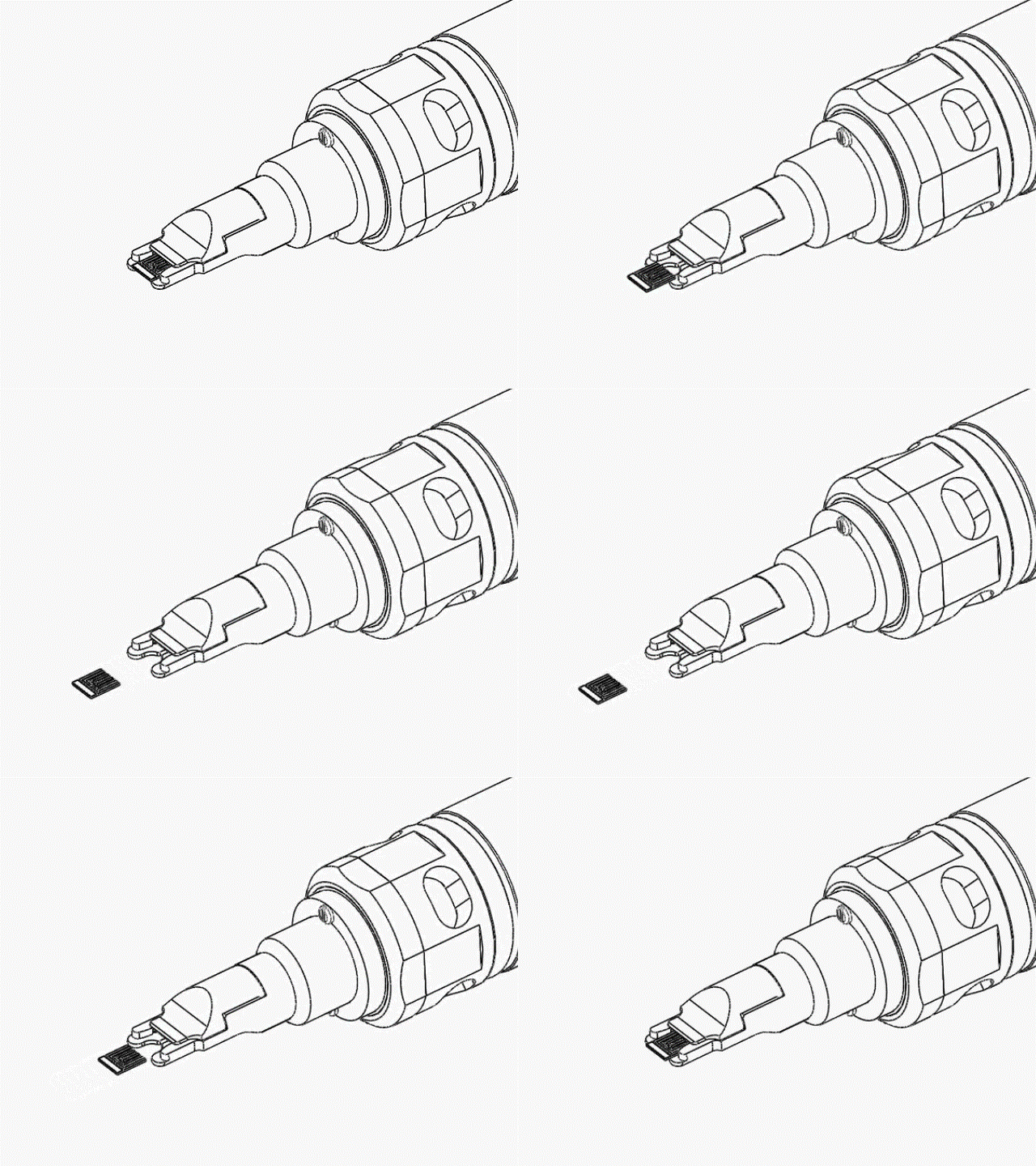
Load MEMS chips directly into the holder using a screw-free insertion mechanism with spring-loaded electrical contacts. Eliminate delicate alignment, wire bonding, and complex mounting procedures while establishing consistent electrical contact. This simplified loading process reduces setup time, improves experiment reproducibility, and enables rapid sample exchange between experiments.

Perform low-noise in-situ electrical measurements with nine direct chip electrical contacts and individually shielded coaxial cables
Advanced electrical characterization requires stable, low-noise signal transmission throughout the experiment. Individually shielded coaxial cabling inside and out of the holder and nine direct-chip electrical contacts minimize electrical interference while supporting simultaneous heating, electrical biasing, multi-terminal measurements, and independent sample grounding for greater experimental flexibility.

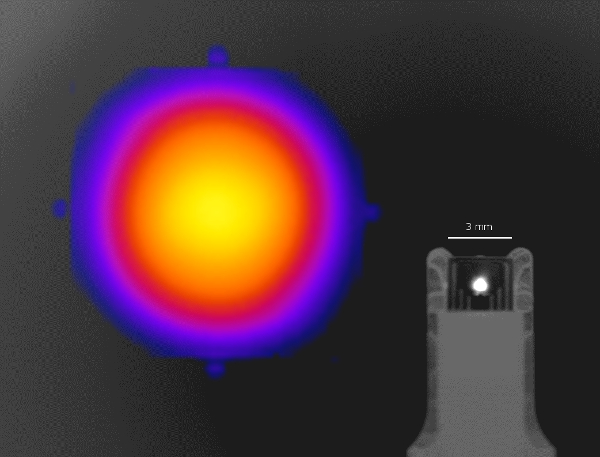
Achieve stable high-temperature experiments with rapid MEMS heating and precise temperature control alongside concurrent biasing
Microfabricated MEMS microheaters deliver temperatures above 1000 °C, while integrated on-chip 4-point resistance sensing enables accurate closed-loop temperature control. Localized heating minimizes thermal loading of the holder and microscope, supporting stable imaging and long-duration experiments. With up to 9 biasing contacts, biasing experiments can be performed concurrently with heating to corrleate multiple properties and applied conditions to observed transformations.

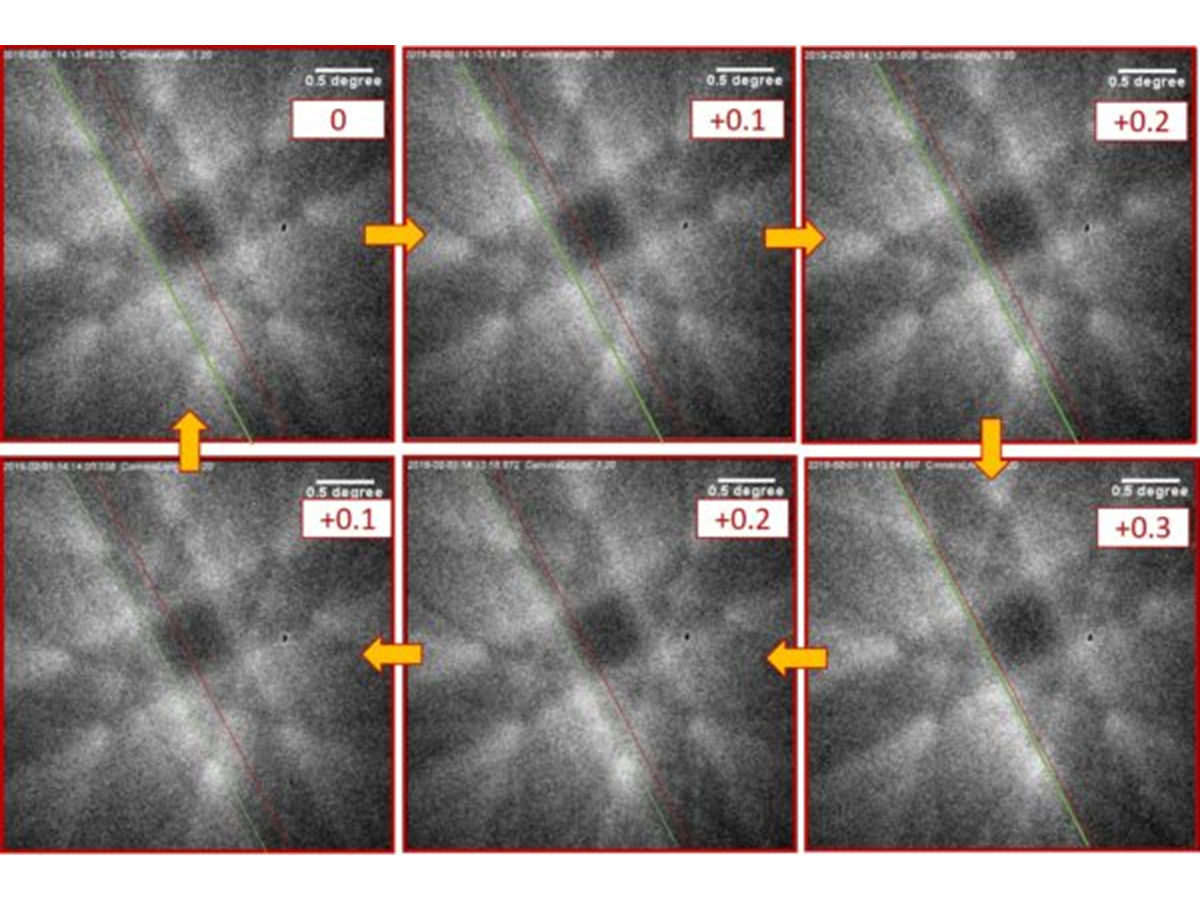
Optimize sample orientation for atomic resolution, zone axis orientation, diffraction, crystallography, and analytical TEM workflows using the double-tilt holder configuration
The high-accuracy double-tilt configuration adds a precision beta tilt axis with minimal backlash, enabling accurate, repeatable sample orientation for demanding in-situ TEM experiments and precise imaging conditions. Independent alpha and beta tilt provide greater flexibility for diffraction, crystallographic analysis, high-resolution and atomic resolution imaging, and analytical TEM workflows where precise sample alignment is essential.

Correlate heating, electrical biasing, and imaging data across TEM, SEM, and X-ray microscopy platforms

Our MEMS heating and electrical biasing platform extends beyond TEM with compatible holders for SEM and synchrotron X-ray microscopy platforms, enabling seamless correlative in-situ characterization across multiple length scales using the same MEMS chips. This integrated workflow combines simultaneous thermal and electrical stimulation with complementary imaging and spectroscopy, providing a more complete understanding of temperature- and electrically driven nanoscale material behavior under realistic operating conditions.

Keep experiments moving with in-stock MEMS chips for heating, electrical biasing, and advanced in-situ TEM characterization
Hummingbird Scientific microfabricates MEMS chips in-house and maintains standard Heating, Electrical Biasing, Heating + Biasing, and FIB lift-out configurations in stock for rapid delivery. Quality-controlled chips are clean packed and ready to use out of the box, with a broad selection of heater designs, electrode layouts, materials, and window geometries. The same MEMS chip platform is compatible across Hummingbird's TEM, SEM, and synchrotron X-ray heating and biasing systems, while custom MEMS chip designs support specialized applications and experimental workflows.

Extend electrical characterization capabilities with specialized biasing hardware and chip configurations for up to 1 kV electrical biasing

Augment the TEM MEMS Heating + Biasing Sample Holder for specialized high-voltage electrical biasing up to 1 kV. Optimized cabling, electrical interfaces, and sample carrier configurations maintain stable electrical performance while supporting simultaneous MEMS heating and in-situ TEM imaging. This capability enables researchers to investigate high-electric-field phenomena, dielectric breakdown, electrical switching, device reliability, and failure mechanisms under realistic operating conditions.

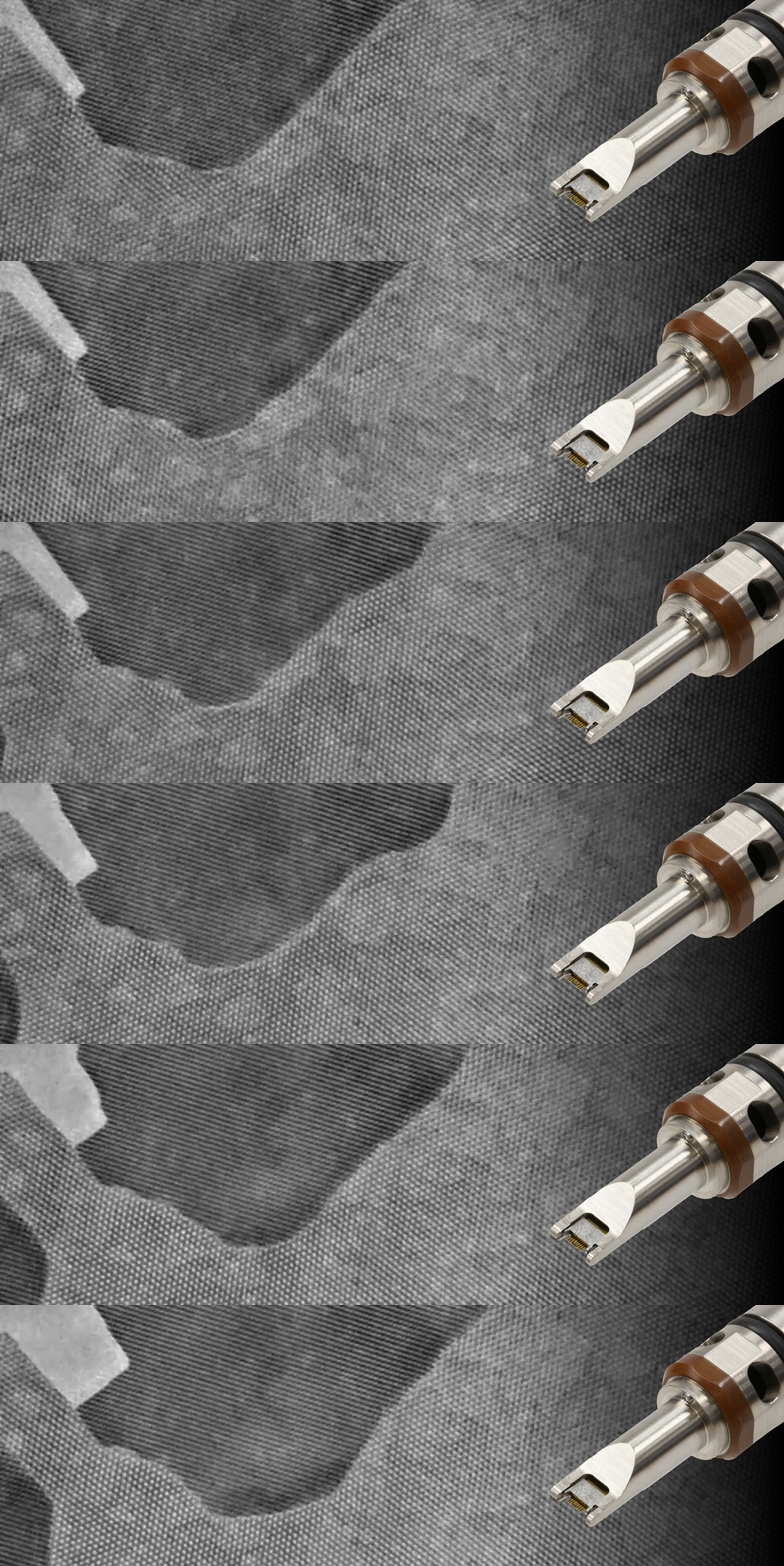
Annealing of 2D MoS2 at different heating rates shows different phase transformations from MoS2 to either a highly ordered crystalline island structure that is composed of both 2H and 3R phases (a-c) or to nanocrystalline and amorphous regions (a,d-e).
Heating-rate-dependence of phase transformations in atomically thin MoS₂ observed by in-situ STEM
The Hummingbird Scientific TEM MEMS Heating + Biasing sample holder was used to directly visualize structural transformations in atomically thin MoS2 during controlled thermal annealing. Using aberration-corrected STEM and a high-frame rate camera, researchers tracked the evolution of the material at the atomic scale at different temperatures. The holder’s rapid and precisely controlled heating capability enabled comparison of equilibrium and non-equilibrium transformation pathways. Fast heating rates produced highly ordered sub-10 nm crystalline islands composed of mixed 2H and 3R phases, while slower heating resulted in nanocrystalline and amorphous structures. These observations revealed how sulfur evaporation and redeposition govern phase evolution in 2DMoS2, providing new insight into the synthesis and engineering of layered nanomaterials.
Reference: Pawan Kumar, et al. npj 2D Materials and Applications (2020).DOI: 10.1038/s41699-020-0150-2
Copyright © 2020 The Author(s). Published under the Creative Commons Attribution 4.0 International License (CC BY 4.0).
Atomic-scale diffusion between two quantum dots heated to 650 °C in-situ inside the TEM using the Hummingbird Scientific TEM MEMS Heating + Biasing sample holder. Diffusion proceeds primarily through the bridge until the particles coalesce.
In-situ TEM atomic-scale diffusion between two quantum dots at high temperature
High-temperature in-situ TEM allows researchers to directly observe how nanoscale materials transform under thermal stimulus. In this video, two quantum dots are heated to 650 °C using the Hummingbird Scientific TEM MEMS Heating + Biasing sample holder. Atomic diffusion appears to occur primarily through the bridge between the particles and continues until the two particles coalesce into one larger particle.
This experiment demonstrates why real-time MEMS heating inside the TEM is valuable: researchers can connect temperature, nanoscale structure, diffusion pathway, and final morphology in a single operando experiment rather than relying only on post-mortem characterization.
Hummingbird Advantages
Reference: HBS internal/customer data provided by Pawan Kumar, Deep Jariwala, and Eric Stach at the University of Pennsylvania.
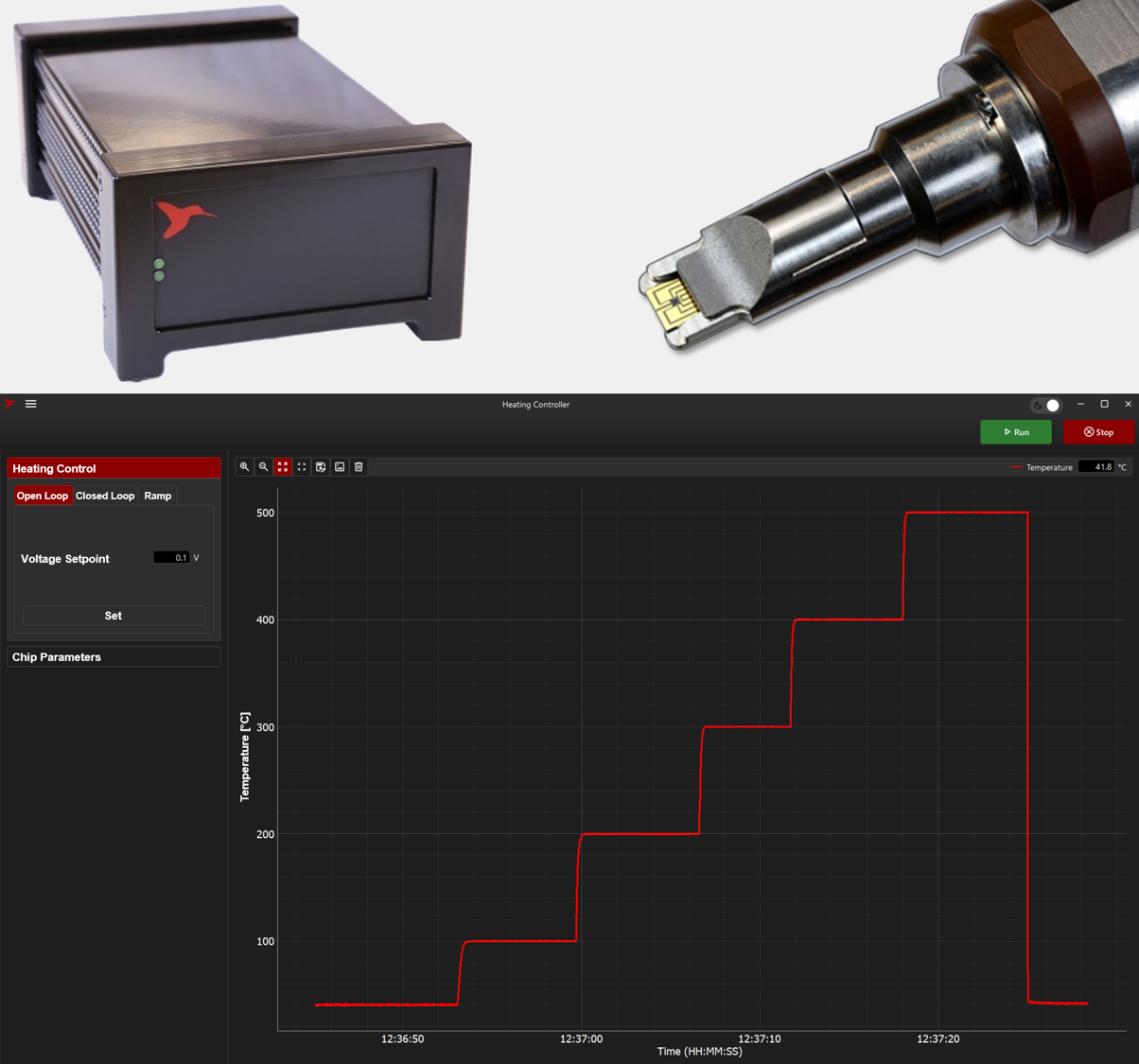
Spend less time managing equipment and more time generating results. Hummingbird Control™ Software provides intuitive control of heating and biasing functions, including temperature set points, closed-loop heating behavior, and voltage sweep workflows when configured with the system.
Hummingbird Connect™ can support the broader software strategy by connecting holder operation, microscope context, imaging workflows, and experiment metadata. Together, these software tools help improve reproducibility, experiment setup, data organization, and long-term usability for in-situ TEM heating and biasing experiments.
Hummingbird Scientific designs, machines, assembles, tests, and services its products in-house. Our integrated in-house engineering, precision manufacturing, microfabrication, software development, applications, and service teams enable rapid prototyping and iteration, custom modifications, and direct technical support throughout the life of the instrument. This vertically integrated approach allows researchers to adapt experimental platforms to unique scientific requirements while maintaining the performance and reliability required for advanced in-situ microscopy experiments.
The TEM MEMS Heating + Biasing Sample Holder reflects this engineering approach by combining MEMS-based heating, electrical biasing, and integrated holder, chip, and controller technologies into a unified platform for reproducible operando in-situ TEM experiments and advanced materials characterization.
Need something unique? Our engineers can customize existing products or develop new solutions to support specialized MEMS chip designs, electrical configurations, sample geometries, and emerging research challenges.
The TEM MEMS Heating + Biasing Sample Holder enables simultaneous heating and electrical biasing of samples during high-resolution in-situ TEM experiments. Using microfabricated MEMS chips, the platform provides closed-loop temperature control above 1000 °C through on-chip 4-point resistance sensing while supporting real-time structural, chemical, and electrical characterization. It is available in both single- and high-accuracy double-tilt configurations to accommodate a wide range of imaging, diffraction, and analytical TEM workflows.
The TEM MEMS Heating + Biasing Sample Holder is used to study how materials and devices respond to thermal and electrical stimuli during in-situ TEM experiments. Researchers can directly observe nanoscale structural, chemical, and electrical changes during phase transformations, electrical transport, electromigration, diffusion, switching, degradation, and failure analysis. Common applications include characterization of semiconductor devices, solid-state battery materials, catalysts, phase-change materials, low-dimensional materials, nanocrystals, and thin films. With standard and custom MEMS chip options backed by Hummingbird's in-house engineering and microfabrication expertise, the platform can be configured to address evolving research challenges and application-specific experimental requirements.
The TEM MEMS Heating + Biasing Sample Holder provides up to 9 standard direct chip electrical contacts for flexible electrical measurements and device characterization. With heating + biasing MEMS chips, four contacts are dedicated to heating and on-chip temperature sensing, leaving five contacts available for sample biasing and grounding. With non-heating biasing MEMS chips, all contacts can be available for biasing experiments.
The TEM MEMS Heating + Biasing Sample Holder uses MEMS-based heating to localize heat directly at the sample, enabling rapid temperature cycling, precise closed-loop temperature control, and a more uniform thermal distribution than conventional heating holders. Because only the sample region is heated, the holder and microscope components remain at significantly lower temperatures, reducing thermal drift, minimizing background signals during EDS analysis, and supporting long-duration experiments without damaging the holder or microscope. The compact MEMS architecture also provides excellent compatibility with narrow pole-piece TEMs while maintaining stable high-resolution imaging and analytical performance.
Yes. The Hummingbird Scientific TEM MEMS Heating + Biasing Sample Holder is compatible with EDS and EELS. A localized MEMS heating architecture minimizes background signals and thermal interference, while the optimized holder tip geometry provides improved clearance for EDS detectors, increasing X-ray collection efficiency compared to conventional heating holder designs. This enables high-quality elemental and chemical analysis alongside simultaneous high-resolution imaging, heating, and electrical biasing during in-situ TEM experiments.
Yes. The Hummingbird Scientific TEM MEMS Heating + Biasing Sample Holder can be configured to support specialized experimental requirements beyond standard heating and electrical biasing workflows. Hummingbird Scientific develops custom MEMS chip designs with application-specific electrode layouts, materials, and geometries, and can provide specialized sample carriers and cabling for high-voltage or high-frequency biasing applications where supported. Contact Hummingbird Scientific to discuss your experimental requirements and confirm compatibility with your microscope, operating conditions, and application.
The Hummingbird Scientific TEM MEMS Heating + Biasing Sample Holder is designed to minimize setup time while maximizing experimental reliability. Screw-free direct MEMS chip insertion onto the holder tip provides fast, repeatable electrical and thermal connections while eliminating the need for manual electrical probe connections, chip alignment, and electrical connection testing.
Hummingbird Control™ software enables researchers to configure heating and electrical biasing experiments, perform voltage sweeps, monitor temperature, and control experimental conditions from a single interface. Together, the integrated hardware and software simplify routine workflows while providing the flexibility required for advanced in-situ TEM characterization.
Hummingbird Connect™ complements these workflows by consolidating holder parameters, microscope settings and metadata, TEM images and movies, and measurement data from third-party software into a single, unified platform. This integrated workflow helps researchers organize experiments, correlate imaging with experimental conditions, improve reproducibility, and maintain comprehensive records of in-situ TEM electrochemistry studies.
The TEM MEMS Heating + Biasing Sample Holder uses Hummingbird Scientific's in-house microfabricated MEMS chip platform to simplify experiment planning while providing exceptional flexibility for in-situ microscopy. Standard heating, electrical biasing, heating + biasing, and FIB lift-out MEMS chips are quality controlled, in stock, and ready to ship within 24 hours through Hummingbird Scientific's online store. A broad selection of heater designs, electrode materials, electrode layouts, and window geometries allows researchers to configure chips for a wide range of experimental requirements. Clean-packed chips are ready to use out of the box, while the same MEMS chip platform is compatible across Hummingbird's TEM, SEM, and synchrotron X-ray heating and biasing systems. The on-chip heating elements provide an extremely localized yet uniform heating profile, minimizing drift and settling times for temperature changes. For specialized applications, Hummingbird also develops custom MEMS chip designs tailored to unique devices and experimental workflows.